16 Festival Safety Tips to Stay Safe and Enjoy the Crowd
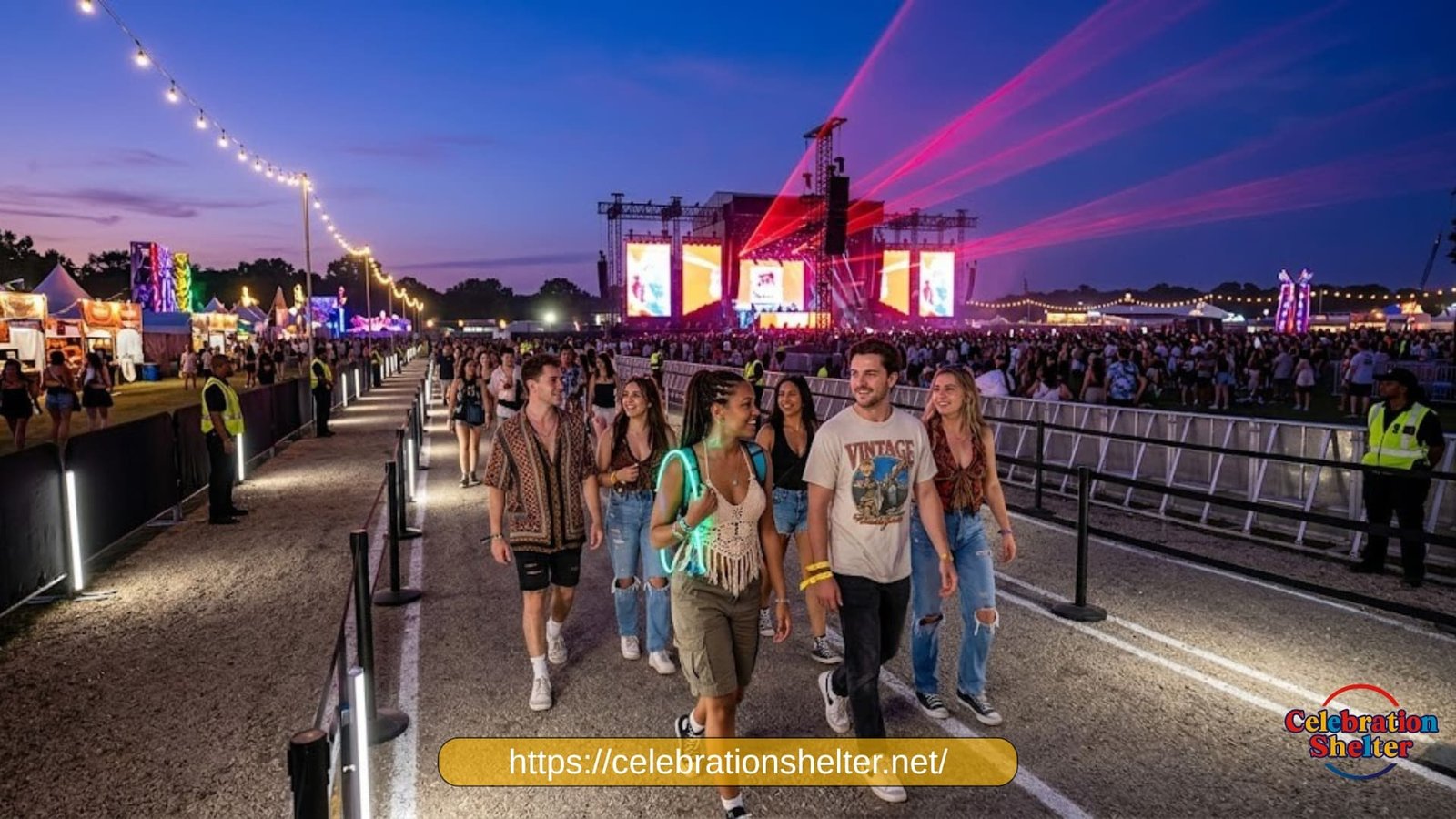
Festivals are chaos by design. Sixty thousand people, one water station you can actually find, and a headliner who starts at midnight. Almost everything that goes wrong over a festival weekend is preventable, and almost none of it requires you to be paranoid about it.
These festival safety tips cover the four things that genuinely put people in the medical tent: crowds, heat, drinks and campsite mistakes. Work through them once before you leave and the rest of the weekend mostly takes care of itself. A structured festival planning guide gets you the logistics; this one keeps you safe once you are on site.
Festival safety tips at a glance
- Screenshot the site map before you arrive and mark the medical tent, exits and your meeting point.
- Crowd density is the warning sign, not the music. If you cannot lift your arms, you are already too deep.
- Heat sends more people to the medical tent than anything else at a US summer festival. Drink on a schedule, not when you feel thirsty.
- Never leave a drink unattended, and know the spiking symptoms so you can act in the first ten minutes.
- Agree on a physical meeting point that works when phones die, because phones always die.
Before you leave home
1. Study the site map and save it offline
Every major festival publishes a site map, and almost nobody reads it. Open it before you travel and mark four things: the medical tent, the welfare or safe space tent, the nearest exits to your camping area, and your meeting point. Then screenshot it. Signal collapses the moment 40,000 phones hit the same cell tower, so a map that lives in your gallery beats one that needs data.
If you are camping, do the same with the campsite layout and note which entrance your pitch is closest to. Finding your tent at 2am in a field of 5,000 identical tents is harder than it sounds — our camping at music festivals guide covers how to mark a pitch so you can spot it in the dark.
2. Share your plan and set check-in times
Send someone who is not at the festival your dates, the festival name, where you are camping and who you are with. Then agree on a simple check-in rhythm with the people you came with: once before the headliner, once before you go to sleep. It takes ten seconds and it is the difference between someone noticing you are missing in an hour or in a day.
3. Pack a safety kit, not just a party kit
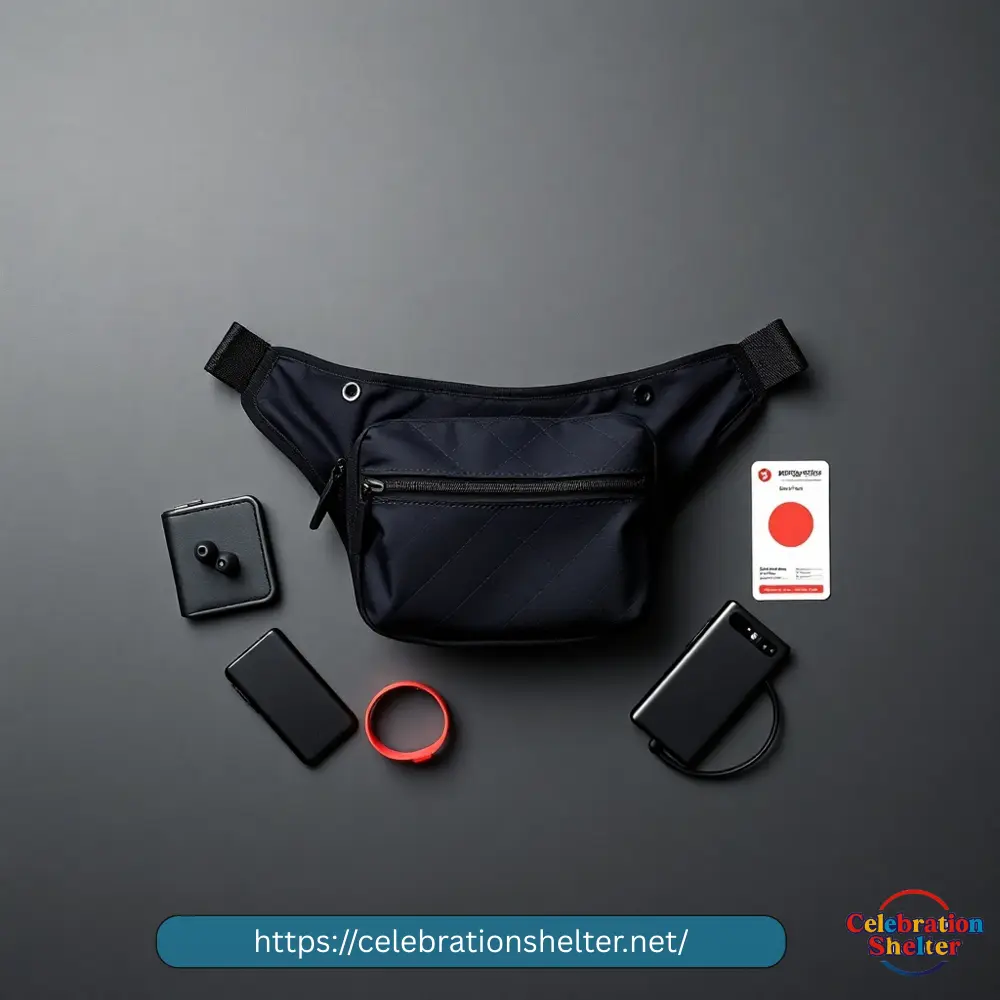
Most packing lists optimise for outfits. The safety layer is small and weighs almost nothing: a power bank, a personal alarm, a small first aid kit with blister plasters, electrolyte sachets, a refillable water bottle, and ear protection. Our lightweight festival go bag list covers what earns its place, and the full music festival packing list handles everything else.
Check the bag rules before you pack. Most US festivals now cap bag size and ban anything without clear panels near the main stages — the music festival bags guide has the current sizes, and a bag that gets confiscated at the gate is a bag that was carrying your safety kit.
Staying safe in the crowd
4. Read crowd density before you are inside it
Crowds do not become dangerous suddenly. They compress gradually, and the tell is always the same: you stop being able to choose where you stand. Before you push toward the barrier, take thirty seconds at the edge and watch. If people are being moved by the crowd rather than walking, that is your answer.
Stand where you can leave. The sides and the back third of a crowd give you an exit line; the middle, ten rows back from the barrier, is the worst place to be in every crowd incident on record. Keep a landmark in view — a light tower, a sound desk, a flag — so you always know which way is out.
5. Know what to do if the crowd surges
If a crowd starts to compress around you, the goal is to protect your chest so you can keep breathing. Crowd crush kills by compressive asphyxia, not by trampling.
- Bring your arms up in front of your chest like a boxer. This holds a pocket of space for your ribcage to expand.
- Stay on your feet and keep your feet apart for balance. Do not bend down for a dropped phone, ever.
- Move diagonally, with the flow rather than against it, taking a step sideways each time the crowd surges and releases.
- Do not shout or push — it burns oxygen and spreads panic. Save your breath.
- Help anyone who goes down immediately, before the space closes over them.
The Astroworld crowd crush in Houston in 2021 is the reference point every US festival now plans around, and it is why the big events have more barrier-side medics and density monitoring than they did five years ago. That does not replace your own judgement about where to stand.
6. Protect your hearing
Festival main stages routinely run past 100 decibels, and the National Institute on Deafness puts the damage threshold at repeated exposure above 85 dBA. Three days at a festival is well past that, and noise-induced hearing loss does not heal.
A pair of filtered earplugs costs less than a round of drinks and keeps the music clear instead of muffled. Our guide to concert hearing protection and the best earplugs for live music compares the options. If you leave a set with ringing ears, that was damage, not a good night.
Heat, water and energy
7. Drink on a schedule, not when you feel thirsty
Thirst is a late signal. By the time you notice it on a 95-degree day in Miami or Phoenix you are already behind. Aim for roughly a pint of water every hour you are on your feet in the sun, and refill every single time you pass a water point, even if your bottle is half full.
Water alone is not enough across a three-day weekend. You sweat out salt as well as fluid, so alternate plain water with an electrolyte sachet a couple of times a day, and alternate every alcoholic drink with a water. Our event health tips go deeper on eating and drinking across a long festival.
8. Know heat exhaustion from heat stroke
These are two different emergencies and the response is not the same. The CDC heat health guidance is worth reading before festival season, but the short version:
- Heat exhaustion — heavy sweating, cold clammy skin, dizziness, nausea, muscle cramps, a fast weak pulse. Get into shade, loosen clothing, sip water, cool the skin. It usually resolves.
- Heat stroke — skin that is hot and dry, a body temperature above 103F, confusion, slurred speech, no sweating, possible loss of consciousness. This is a medical emergency. Get them to the medical tent or call for help immediately and cool them aggressively while you wait. Do not give fluids to someone who is confused.
The one that catches people out is the sweating stopping. That is not the heat breaking — it is the warning sign that it has become serious.
9. Pace the weekend, not just the day
Almost nobody gets into trouble on day one. It is day three, on four hours of sleep and two proper meals, that judgement slips. Eat something real every day, take a deliberate hour in the shade each afternoon, and accept that you will miss a set. Our festival energy tips cover how to actually last the weekend, and the festival food packing guide covers what to bring so you are not living on stall fries.
Drinks, substances and spiking
10. Keep your drink covered and know the signs of spiking
Buy your own drinks, watch them being poured, and keep a hand or a lid over the top. Never accept an open drink from someone you do not know, and never leave a cup on a barrier or a table while you dance — an unattended drink is the only opening a spiker needs.
Spiking symptoms usually arrive within fifteen to thirty minutes and feel disproportionate to what you drank: sudden severe dizziness, difficulty speaking or focusing your eyes, nausea, confusion, or a wave of drowsiness that comes out of nowhere.
If you or a friend feel it, act immediately and do not wait to see if it passes:
- Tell the person you are with straight away, and stay together.
- Get to the medical or welfare tent, or tell the nearest staff member in a bib. Festival medics deal with this constantly and will not judge or involve police unless you ask.
- Keep the drink if you safely can — it can be tested.
- Do not let an affected person leave the site alone or go off with someone you do not know.
- In the US, Poison Control is free, confidential and available 24/7 if you need advice fast.
11. Be careful with alcohol, medication and heat
Heat multiplies everything. Alcohol dehydrates you faster in the sun, and several common prescriptions — antihistamines, some antidepressants, blood pressure medication — reduce your ability to regulate temperature. If you take anything daily, take it as normal, keep it in its original packaging for the gate check, and be deliberate about shade and water.
The other rule that has not changed: do not accept substances, drinks or a ride from a stranger, and do not go somewhere private with someone you met an hour ago. Most festival regret traces back to one of those three.
Harassment and personal safety
What the research actually says
Harassment at festivals is common enough that it is worth planning around. The most substantial research is British: a 2018 YouGov poll of 1,188 festival-goers found that one in five had experienced sexual harassment or assault at a festival, rising to one in three women and 43% of women under 40.
Separate research by Dr Hannah Bows at Durham Law School surveyed 450 festival-goers and found a third of women had been sexually harassed at a festival and 8% had been sexually assaulted, with unwanted groping in crowded stage areas and campsites the most commonly reported experience. Both studies are UK-based — there is no equivalent US dataset at that scale — but the pattern and the locations translate directly.
12. Use a buddy system and agree on a meeting point
Do not wander off alone, especially at night and especially between the arena and the campsite. Agree at the start of the day on a meeting point that is fixed, lit and easy to describe — a specific food stall, the left side of the sound desk, the entrance to your campsite block. Not a stage, because stages move people around.
Then agree on the rule that matters: if anyone gets separated and cannot reach the group, they go to the meeting point and wait rather than searching. If you are attending on your own, our solo music festival guide covers how to build a temporary crew for exactly this reason.
13. Do not rely on security alone, and know how to report
Festival security is real but stretched thin, and it is focused on crowd control and gates rather than on what happens in the middle of a packed field. Assume that if something happens to you, the first response has to be yours.
That said, most US festivals now run reporting channels that work better than flagging down a guard. Before you arrive, check the festival app or the event info page for a safety text line — many events publish a number you can text discreetly with your location. Look for the welfare or safe space tent on the map, and know that medical staff are the fastest route to help of any kind. If you need support after the event, RAINN runs the US national sexual assault hotline, free and confidential.
14. Carry a personal alarm and secure your tent
A personal alarm is loud, legal everywhere, allowed through every gate and needs no skill to use. Keep it clipped where you can reach it without unzipping a bag, and keep a second one inside the tent by the door.
Tents do not lock, so the rule is simple: nothing you would mind losing goes in one. Keep your phone, wallet, keys and ID on your body in a zipped pocket or a bum bag, even while you sleep. Our festival tent guide covers pitching somewhere visible and well-lit, and the camping festival checklist has the rest of the campsite kit.
Money, phone and belongings
15. Guard your phone, wallet and wristband
Pickpocketing at festivals happens in exactly two places: dense crowds near the stage, and the queue for the toilets. Keep your phone and wallet in a zipped front pocket or a bag worn across your body and in front of you, not slung behind. Leave anything valuable and non-essential at home entirely.
Your wristband deserves the same care as your wallet. Most large US festivals are now cashless and tie entry, payment and sometimes your locker to that band — if it comes off or is cloned, your weekend stops. Register it, set a PIN if the app offers one, and read how cashless festival systems fail so you know what to do when the terminals go down, which they do.
16. Keep your phone alive and have an offline plan
A dead phone is the single most common festival emergency. Bring a power bank that can do two full charges, turn on low power mode at the gate, and keep the phone in airplane mode with wifi off while you are in the crowd — hunting for signal is what drains it.
Then build a plan that survives the phone dying: write one friend’s number on your arm in marker, save an ICE contact on your lock screen, and screenshot your ticket, your campsite location and the site map. Our festival hacks guide has more of these small tricks.
Weather and campsite risks
Storms, lightning and evacuations
Open fields, metal stage rigging and tents are a bad combination in a thunderstorm, and US festivals do evacuate. Check the forecast each morning, and if an evacuation or shelter announcement comes over the PA, move immediately and do not wait for your group — go to the meeting point afterwards. The National Weather Service lightning safety guidance is the short version: a tent gives you no protection, a hard-topped vehicle does.
Fire safety at camp
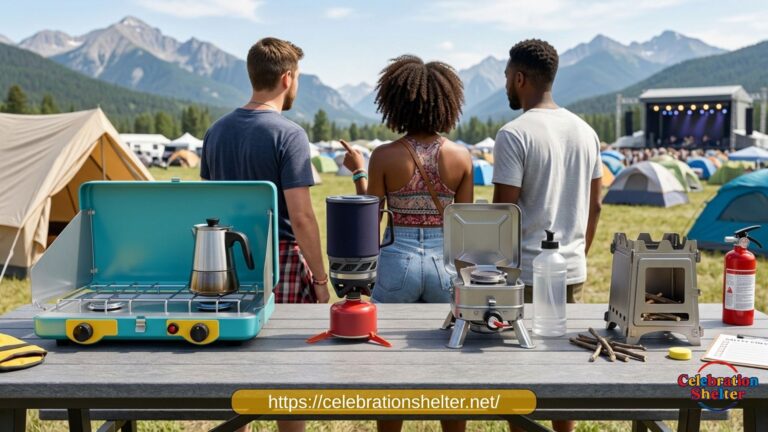
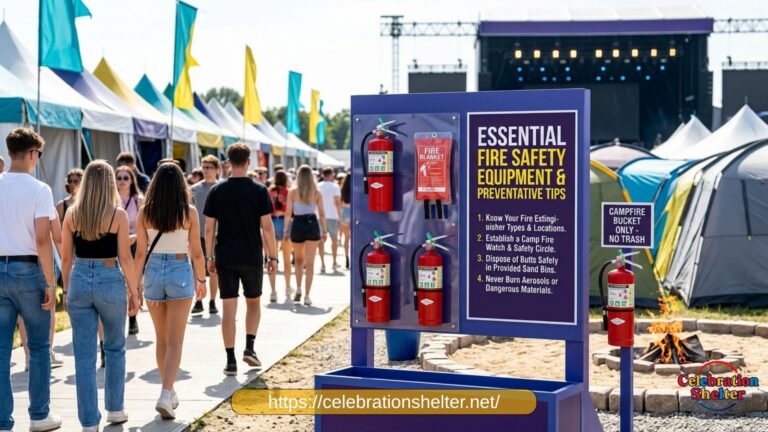
Camping stoves, disposable barbecues and tightly packed nylon tents cause more festival injuries than most people expect. Never cook inside or in the doorway of a tent, never bring a barbecue in to keep warm — carbon monoxide is silent and has killed campers — and leave a gap between your tent and your neighbour’s. Our fire safety tips for festivals cover the rest.
Extra care for solo festival-goers, women and families
Going alone: tell someone your schedule, camp near other groups rather than on an isolated edge, and make one or two friends near your pitch on day one so somebody notices if you are not around.
Women: most reported incidents happen in dense stage crowds and in campsites at night. Move to the edge of a crowd the moment something feels wrong — you owe nobody an explanation — and travel between the arena and campsite in twos.
With kids: write your phone number on their arm, photograph them each morning in what they are wearing, pick a meeting point at their eye level, and fit them with ear defenders. Agree they go to a staff member in a uniform bib if they get lost.
Pre-festival safety checklist
Run through these festival safety tips the night before you travel. It takes about ten minutes.
- Site map and campsite layout screenshotted, medical tent and exits marked
- Meeting point agreed with everyone you are travelling with
- Someone at home has your dates, location and who you are with
- Power bank charged, ICE contact on the lock screen, one number written on your arm
- Ticket, ID and campsite photo saved offline
- Personal alarm packed and reachable without opening a bag
- Filtered earplugs packed
- Refillable water bottle and electrolyte sachets packed
- Small first aid kit: blister plasters, painkillers, antiseptic wipes
- Bag checked against the festival size and clear-panel rules
- Any prescription medication in its original packaging
- Festival app downloaded and the safety text number saved
Cross-check it against the full music festival checklist before you zip the bag.
Festival safety FAQ
How do you survive a crowd crush at a festival?
Keep your arms up in front of your chest like a boxer so your ribcage can expand, stay on your feet with your feet apart, and move diagonally with the surges rather than against them. Never bend down to pick anything up, and do not shout or push. The better answer is to avoid the middle of a dense crowd in the first place and always keep an exit line in view.
What should you not bring to a festival?
Anything valuable you would mind losing, glass, weapons, drones, and — at most large US festivals — any bag that is oversized or lacks clear panels near the main stages. Check the event’s bag policy before you pack, because rules vary and gate staff will not hold items for you.
How much water should you drink at a festival?
Roughly a pint an hour while you are on your feet in the sun, and refill every time you pass a water point. Alternate every alcoholic drink with water, and add an electrolyte sachet a couple of times a day — across a hot three-day weekend you lose salt as well as fluid, and water alone will not replace it.
What do you do if your drink is spiked?
Tell the person you are with immediately, get to the medical or welfare tent, and stay with someone you trust. Symptoms usually hit within fifteen to thirty minutes and feel far stronger than what you drank: severe dizziness, slurred speech, confusion or sudden drowsiness. Keep the drink if you can, and do not let an affected person leave alone.
Is it safe to go to a festival alone?
Yes, with preparation, and the festival safety tips above apply double. Tell someone your schedule, camp near other groups rather than on an isolated edge, introduce yourself to your neighbours on day one, and set your own check-in times with someone at home. Plenty of people attend solo every year — see our solo music festival guide for the full approach.
Are festivals safer than they used to be?
In some respects, yes. Since Astroworld in 2021, large US events run more barrier-side medics, better crowd density monitoring and published safety text lines, and many have added welfare tents and zero-tolerance harassment policies. None of that removes the need for the basics above, and harassment in crowds and campsites remains the area where progress has been slowest.
Final thoughts
Festival safety is not about being afraid. It is about making a handful of decisions before you arrive — where you will meet, what is in your bag, how much water you are drinking, where you will stand — so that you are not making them at 1am on day three with a dead phone.
Work through these festival safety tips once, do the ten-minute checklist, look after the people you came with, and then go and enjoy the weekend. Next, pick your event from our upcoming US festival listings and plan the rest around it.