
Why Cashless Music Festivals Are a Total Nightmare
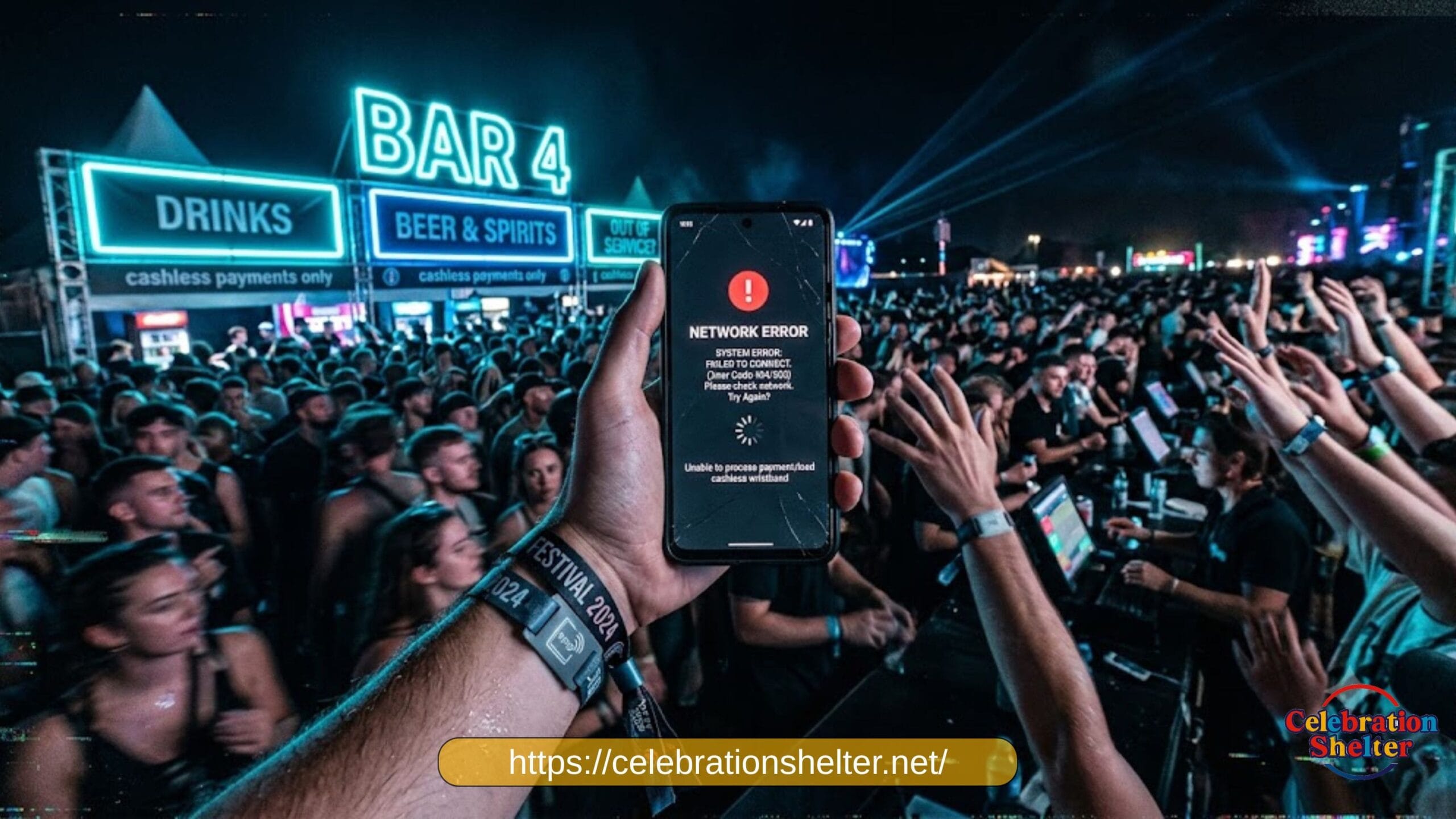
Festival organizers continuously promise that cashless payment ecosystems will solve crowd bottlenecks, eliminate operational friction, and radically accelerate food and drink transactions.
However, three years after major international music festivals aggressively adopted these mandatory, proprietary wristband and closed-loop card configurations, fans are experiencing a completely different reality. Attendees still face massive lines, exhausting digital refund processes, hidden processing overheads, and total network blackouts that leave thousands stranded on the turf without a reliable way to access food or drinking water. Industry tracking data shows that a staggering 73% of active festivalgoers report significantly higher levels of frustration with event-specific cashless systems compared to standard, traditional payment methods.
Major events continue to deploy these flawed digital setups while completely ignoring simple, universal solutions that already exist inside everyone’s pocket. Attendees deserve far better than being forced into proprietary financial schemes that benefit the event’s cash flow at the explicit expense of the community. These 10 critical issues lay bare why cashless festivals generate far more operational nightmares than they solve.
Cashless Systems Absolutely Fail to Cut Down on Lines
Remember the primary marketing promise distributed across every pre-event newsletter? “Cashless payments streamline point-of-sale transactions, reducing wait times and vaporizing long festival queues.” That promise has aged about as beautifully as a cheap fabric wristband dragged through three days of thick mud and questionable campground hygiene. The reality check hits incredibly hard when you are trapped in a massive beer line behind someone frantically waving a dead, unresponsive plastic bead at an electronic scanner like they are trying to summon stage spirits.
The transaction math simply does not add up in the field. Instead of quick, fluid cash handovers or direct card taps, vendors now spend valuable minutes auditing whether a guest’s profile contains enough digital credits, debugging local Bluetooth connection drops, or explaining to a massive row of angry fans why the terminal mainframe just crashed again. The operational bottleneck never disappeared; it merely migrated from counting physical change to troubleshooting malfunctioning hardware. Your basic afternoon beverage run now includes a mandatory IT support session, forcing you to watch the people ahead of you discover their wristband accounts died right when they required vital hydration.
Deep Shortages of Field Reup Locations
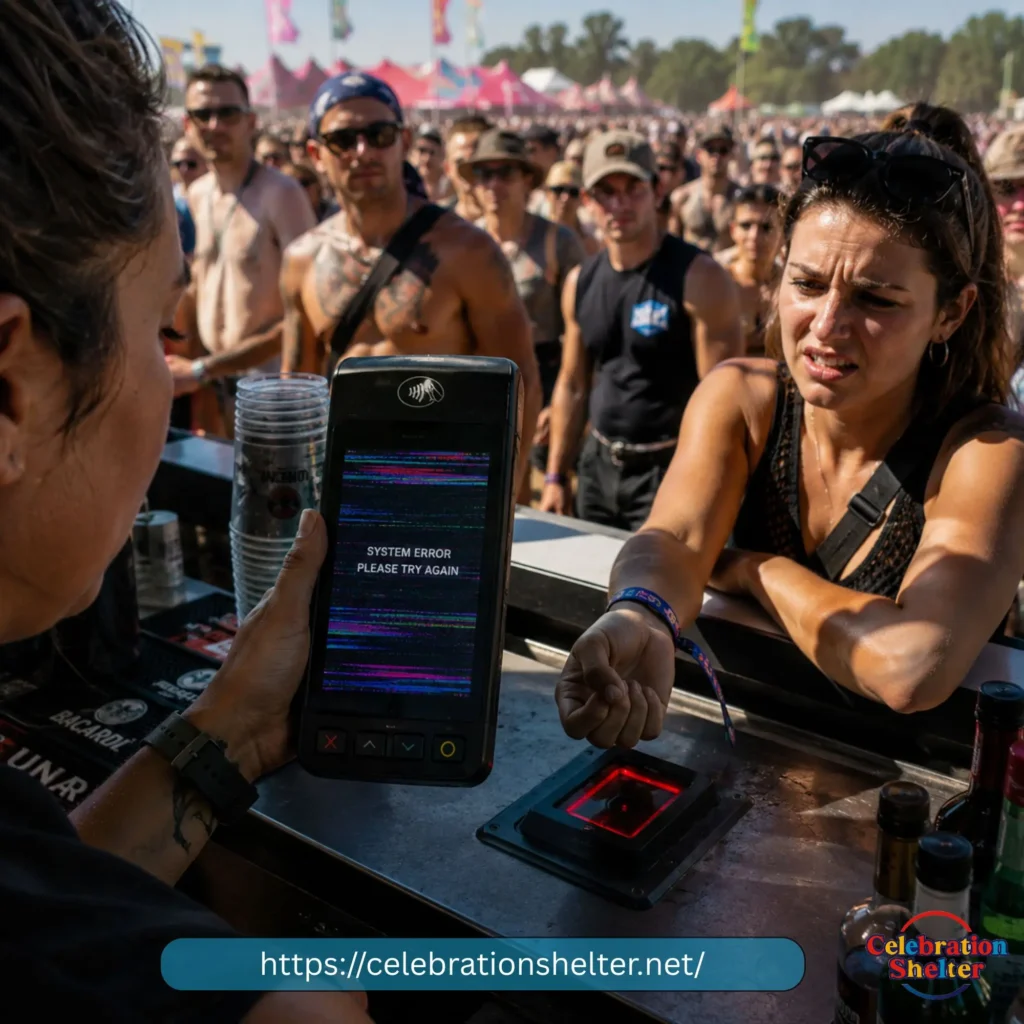
Festival management boards act as though they have cracked an elite logistics code by scattering a mere three physical top-up stations across a sprawling valley venue holding over 50,000 active ticket buyers. The production designers behind this strategy have clearly never experienced the joy of hiking half a mile through dense, high-traffic crowd bottlenecks just to add credits to an electronic band. These elusive recharge points become harder to spot than a clean portable restroom, hidden behind massive food trucks and camouflaged next to merchandise tents like a frustrating treasure hunt.
The real kicker? These isolated tech stations are notorious for breaking down entirely during peak headline movements. Nothing says “elite festival hospitality” quite like discovering that the only operational top-up kiosk within three fields has a line stretching longer than the headliner’s main stage set. By the time you successfully upload digital currency onto your wristband, you have missed half the breakout artists you traveled to discover and developed a deep personal grudge against the system’s design.
Recovering Leftover Credits Is Intentionally Bureaucratic
Attempting to claw your own leftover currency back from a festival’s finance department feels exactly like trying to cancel a corporate gym membership while blindfolded. The moment you mention post-event refunds, organizers suddenly develop selective hearing, transforming instantly from enthusiastic sellers into bureaucratic ninjas who have mastered the art of making basic data processes incredibly complex. They will happily extract $100 from your debit card in seconds pre-show, but recovering your remaining $23.50 requires digital forms, lengthy processing windows, and immense patience.
The standard refund track typically forces you to download a clunky, ad-heavy mobile application months after the gates close, register a new account you will never use again, and forfeit a mandatory “administrative fee” that frequently consumes a massive percentage of your balance. Certain events generously restrict your claim window to a tight 90 days, relying on artificial urgency to ensure lazy fans forget to execute the process entirely. By the time you navigate their corporate digital obstacle course, you have burned far more personal time and energy than the leftover cash was worth—which was undoubtedly their exact operational plan from the very beginning.
Continuous Malfunction Junction Across the Network
High-density wireless technology and outdoor festival elements mix about as smoothly as body glitter and torrential rain, yet production companies continue to push these digital infrastructure dependencies as if they are completely bulletproof. The exact second 20,000 fans simultaneously rush the concession fields during a dinner break to scan their bands, the local localized cellular network crumbles faster than your weekend timeline. Food workers start giving you a blank stare as their point-of-sale screens freeze completely, leaving you standing there waving your arm helplessly at an unresponsive reader.
These technical system drops consistently manifest during peak temperature windows when you are experiencing high physical exhaustion and the summer sun is beating down on the crowd. Concession staff members can only shrug while pointing at broken system screens, muttering vague statements about “central server issues” as if that technical jargon makes your severe dehydration vanish. Watching an entire high-volume beverage tent shut down completely because their proprietary payment mainframe decided to take an unscheduled vacation is an operational failure that leaves fans stranded.
We Already Possess Infinitely Better Contactless Options
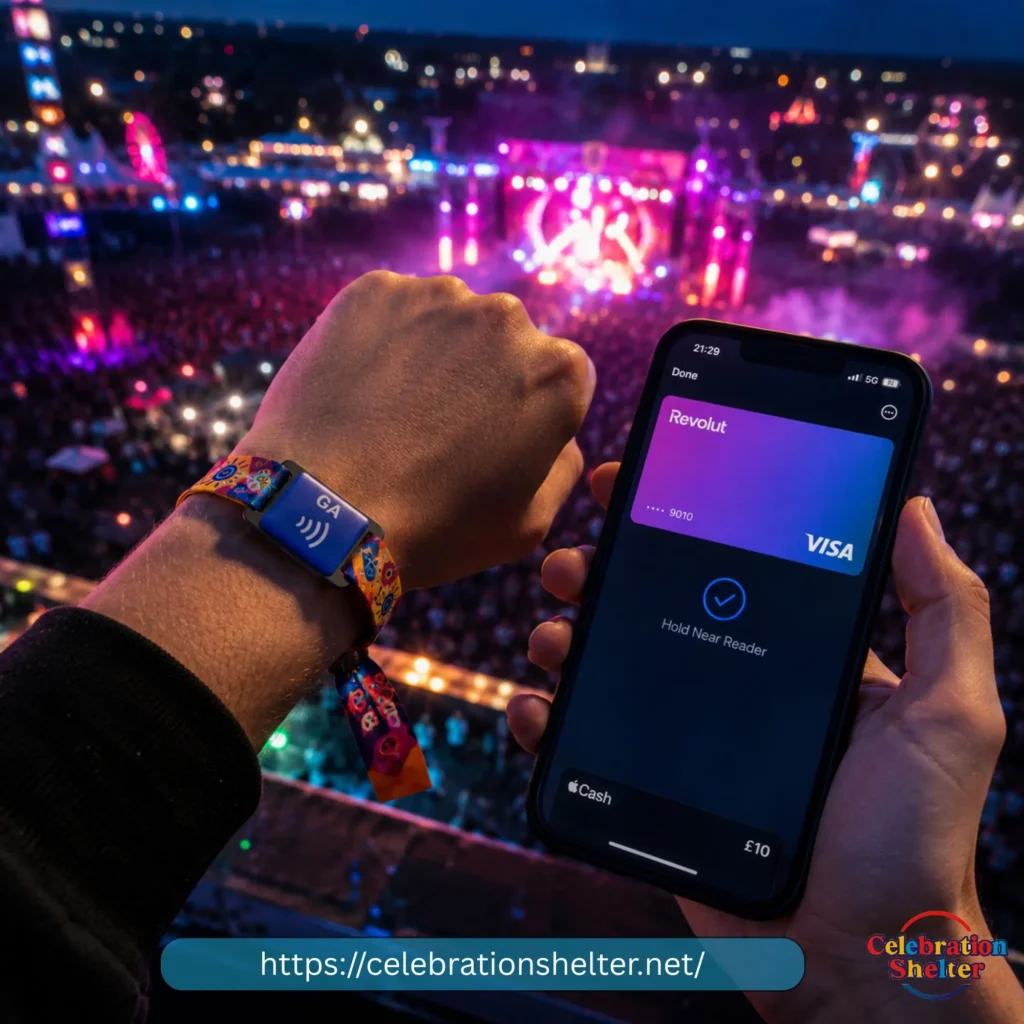
Here is the ultimate structural plot twist: every single individual walking through the venue perimeter already carries a flawless, hyper-secure cashless payment device inside their pocket. Enterprise utilities like Apple Pay, Google Wallet, and contactless Visa or Mastercard accounts operate with absolute reliability at every coffee shop, city transit line, and grocery market across the global grid daily. These global mainframes process billions of secure financial transactions without breaking a sweat, yet music festival directors act as though this established commercial technology simply does not exist.
The irony burns hotter than an unshaded campground field in peak August. While you are forced to fumble with a clunky, event-specific wristband, your personal smartphone sits inside your daypack entirely capable of execution via a standard tap-and-pay terminal. Instead of adopting open-loop standards, festivals insist on completely reinventing the wheel, creating a proprietary square version that costs significantly more to deploy, introduces massive cybersecurity vulnerabilities, and performs infinitely worse than the stable round solution already in your hand.
Exploiting Attendees for Interest-Free Working Capital
This is the exact point where live event corporate boards drop their customer-first mask and reveal pure capitalist motives. They have discovered an elite corporate finance hack: tricking you into paying for your overpriced meals and concert merchandise weeks before you have even cleared the vehicle checkpoint gates. Forcing attendees to pre-load hundreds of dollars onto an app means the production company is effectively running a massive, interest-free loan campaign where you act as the generous lender.
This calculated scheme transforms thousands of music fans into temporary, unwilling investors to patch up the festival’s internal cash flow struggles. Marketing departments mask this using slick “convenience and speed” messaging, while your hard-earned capital sits inside their corporate accounts earning financial interest for months ahead of the show. The true convenience belongs entirely to their accounting department, which uses your upfront money as working capital to fund everything from early artist deposits to stage decoration rentals long before you ever receive a single item.
Deceptive Marketing Regarding Visitor Flow Metrics
Festival marketing squads must graduate from the exact same storytelling academies that train career politicians how to distribute empty promises. They swear under oath that proprietary cashless setups possess near-magical capabilities to streamline visitor flow across the grounds, yet anyone who actually walks the paths knows the entry lanes have grown increasingly clogged and frustrating. The promised “improved flow” feels far more like standing in digital quicksand.
The hard reality check hits the minute you line up at a concession stand, only to spend your time watching an entire row of consumers try to revive dead tech assets while managing confusing app interfaces. When you are forced to step away from a stage to locate a hidden top-up station just to buy basic fuel, your physical transit flow across the venue is completely disrupted. If you want to ensure your personal gear remains completely organized and secure without relying on buggy app maps, packing a dedicated daypack from our pre-vetted index of the best music festival bags keeps your vital resources locked close to your body.
Transforming Your Wrist into a Corporate Billboard
In plain business terms, the push for proprietary cashless systems is a thinly veiled strategy to construct aggressive new monetization channels for corporate sponsors. Brand partners now purchase prime digital and physical real estate directly on your tracking band, turning your mandatory admission device into a walking advertisement that you are physically locked into wearing all weekend. Every single transaction you execute becomes a forced promotional view.
This commercial integration tracks far deeper than surface-level brand logos stamped onto plastic beads. Sponsors utilize these closed-loop networks to actively track your personal spending habits, monitor your exact chronological footprints between stages, and assemble granular profiles of consumer behavior. Your innocent afternoon beverage purchase is instantly converted into valuable data points sold to the highest corporate bidder, all while you are simply trying to enjoy live music. To make sure your daily wardrobe stays entirely functional and shields you from field dust without broadcasting brand metrics, consult our ultimate music festival outfit guide for smart styling insights.
Highly Questionable Claims Regarding Theft Prevention
Organizers love to broadcast the narrative that cashless wristbands eliminate pickpockets entirely, as if local thieves suddenly retired the second paper cash vanished from the fields. In reality, street-smart opportunists merely upgraded their strategy. Instead of targeting a loose $20 bill, criminals now target the high-value smartphone linked directly to your digital wallet app, or target physical wristbands left loose on an attendee’s arm.
The security narrative falls apart entirely the minute your digital band malfunctions, leaving you completely broke in a remote field until you locate a support booth. When you carry standard physical currency safely stored inside a lockable pouch, a technology failure never revokes your purchasing power. To ensure you maintain absolute security across your camp clearing and pack your inventory fully within safety lines, cross-reference your gear with our comprehensive camping festival checklist to insulate your assets from risk.
Forcing Buggy Event Apps Into the Transaction Loop
Standard festival mobile applications are notorious for crashing continuously due to localized network strain, especially when thousands of fans attempt to load schedule grids simultaneously after midnight. Forcing financial payment modules into these fragile digital applications creates a perfect storm of technical failure. Your smartphone battery drains at an alarming rate when every single purchase requires opening an unoptimized app that constantly tracks your GPS coordinates.
Relying on an app-based payment structure means your access to basic resources is tied directly to your phone’s battery life and the stability of the venue’s spotty Wi-Fi network. If your phone dies or experiences a software loop mid-transaction, you are instantly locked out of buying food or securing a rideshare home, adding immense, unnecessary stress to your trip.
Technical Security & Smart Financial Survival
Navigating a modern festival environment comfortably requires treating your financial assets with absolute intention. If you are structuring an independent journey to an unfamiliar open-field gathering entirely on your own and need to manage your travel resources cleanly, reference our best solo music festival guide to master field networking and protect your funds effortlessly. If you are an independent event producer planning a gathering and want to skip proprietary tech disasters to manage your large field workforce fluidly, utilizing an advanced digital event staff scheduling software keeps your internal crew schedules synchronized via standard communication networks.
To shield your baseline access options if a digital network experiences a total blackout, always carry a small reserve of physical cash notes and a contactless debit card stored deep inside a secure inner zipper pocket. To see what other redundant gear or vital safety items you should pack to ensure a completely stress-free weekend, audit our complete master music festival packing list before launching your tour. Planners establish technical travel milestones early, using the correct event creation timeline options to secure all entry passes cleanly.
Final Thoughts
While digital transactions offer exceptional utility when integrated using open, universal standards like standard credit card taps, forcing fans into proprietary, closed-loop festival payment systems introduces massive operational friction. From broken servers and long top-up queues to corporate data tracking and complex refund paths, cashless wristbands privilege organizer metrics over consumer safety. Until production companies embrace the universal payment technologies that people rely on daily, smart festivalgoers must understand these digital limitations, maintain physical cash backups, and protect their consumer rights across the fields.
FAQs
What exactly is a closed-loop cashless festival payment system?
A closed-loop cashless system is a proprietary payment network engineered by an event where attendees are forced to exchange standard currency for digital event credits loaded onto an RFID wristband or a specialized app. This system completely blocks the use of physical cash or standard external bank cards at internal vendor stands.
Why do major festival production companies insist on deploying these cashless systems?
Organizers implement proprietary cashless structures to secure upfront consumer capital weeks before gates open, collect detailed data tracking profiles of attendee spending habits, minimize cash handling logistics, and maximize internal concession revenue.
Do cashless festival wristbands actually speed up vendor lines?
Statistically, no. While a successful digital scan takes seconds, frequent local network blackouts, user profile credit shortages, frozen terminal screens, and consumer confusion create massive technical bottlenecks that frequently slow down queues significantly more than traditional cash handovers.
What structural steps should I take if my festival wristband stops working on site?
You will be forced to depart the concession line and locate a designated customer service support pavilion or technical top-up kiosk. Expect long queues at these stations during peak performance hours, as technicians manually re-sync your profile data onto a replacement band.
Can attendees easily recover unused cash loaded onto an event wristband?
While the vast majority of festivals offer post-event refunds, the process is intentionally designed with friction. Fans typically face tight application deadlines, mandatory creation of third-party digital accounts, and administrative processing fees that deduct money straight from your remaining balance.
Are proprietary cashless systems fundamentally safer than carrying cash notes?
Not necessarily. While they eliminate loose bills slipping out of pockets, they introduce severe new vulnerabilities, including electronic pickpocketing via unauthorized RFID skimming, total account freezes during tower blackouts, personal data privacy drops, and absolute loss of purchasing power if your smartphone battery drains.
How can I protect my purchasing power if a festival network experiences a total freeze?
Always carry a small, concealed emergency reserve of physical cash notes and a contactless bank card stored inside a secure crossbody pouch. Even at cash-free events, independent food truck vendors will occasionally revert to manual tracking or direct card readers if the primary system fails.