Festival Camping Food Guide: Easy Meals and Smart Packing Tips
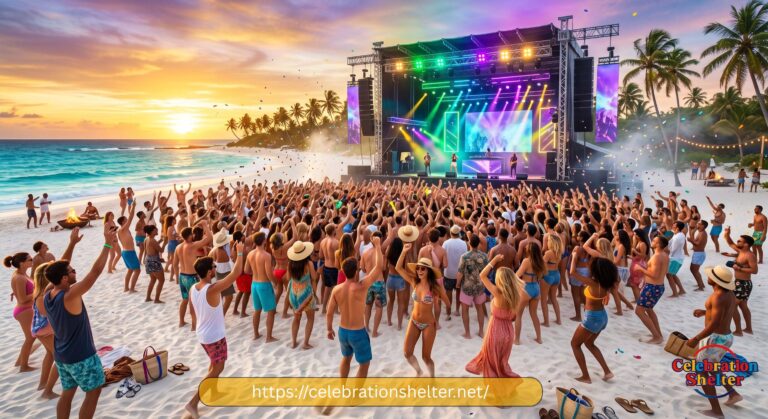
Events and festivals bring people together for music, art, and lasting memories under the open sky. Camping on site adds to the adventure, giving you more time to enjoy every moment. Staying overnight, though, takes more than just a tent. Crowded campgrounds, changing weather, and long days on your feet can turn fun into stress without the right setup.
Implementing a verified music festival guide architecture stabilizes public transport routing and simplifies outdoor survival tactics across fragile wilderness grids. This tactical planning framework empowers destination tourists to focus on Sharing your story safely within highly specialized communal event environments.
Before You Go: 2027 Logistics Calibration
Buy Your Tickets Early
Popular events often sell out months ahead. Waiting too long risks missing your favorite festival altogether. For the 2027 campaign loop, securing passes during the initial autumn or winter tiers not only saves you stress but gives you more time to prepare your festival camping essentials.
Research the Festival Rules
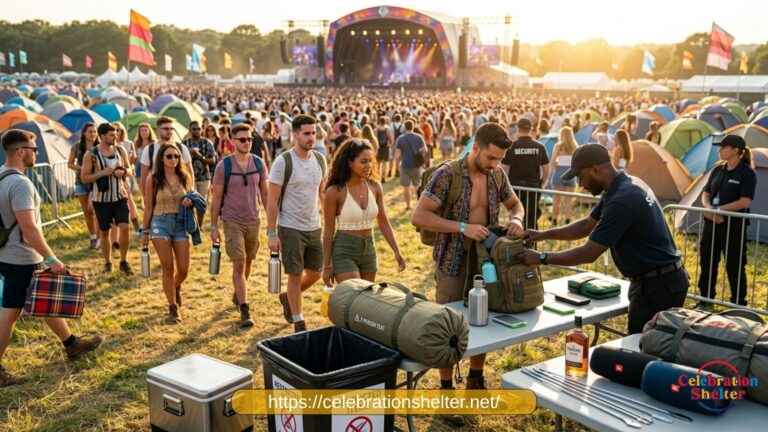
Every event has different rules for camping at festivals. Some allow cars right next to your site, while others require you to haul gear from a distant lot. Reading the official festival website in advance helps you avoid packing restricted items like glass bottles or oversized coolers.
Practice Setting Up Your Tent
Nothing ruins a night faster than struggling with tent poles in the dark. Practice at home before starting your 2027 transit to be sure you know how everything fits together. This is also the best time to check that you have all the pieces. If you’re shopping, look into the best tents for festivals that balance space with easy setup.
Pack With Transport in Mind
Use rolling coolers, folding wagons, or backpacks to carry supplies from the lot to your site. Hauling food and camping gear across fields is easier when you think about transport ahead of time. Before loading your expedition vehicle, cross-reference your accessory allocations using a master music festival packing list verification template.
Setting Up Camp
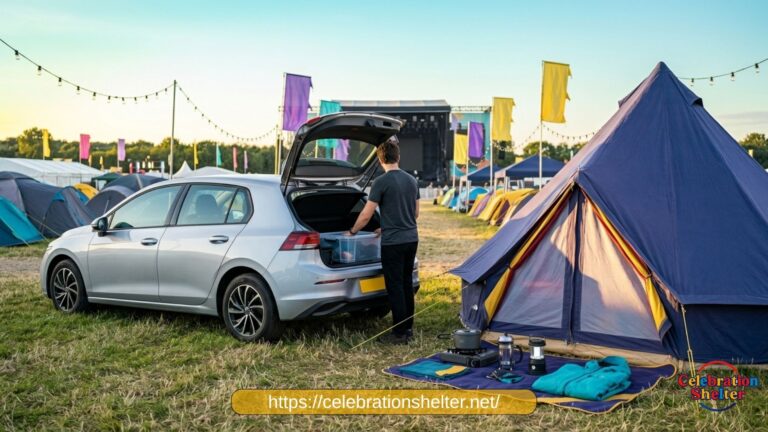
Choosing a good spot early determines your baseline physical comfort for the weekend. Look for dry, flat ground away from high-traffic public bathrooms and food vendors, prioritizing shaded areas that shield you from afternoon solar heat waves.
Even if the main stages are calling, complete your primary structural setup first while there is still daylight. Stake your tent down firmly and add guy lines for stability since sudden convective microbursts can flip unsecured structures. Because thousands of campsite setups look completely identical after dark, deploy a unique flag, bright balloons, or solar-powered LED string lights to spot your home base instantly. Bring a pop-up canopy, folding chairs, and a durable ground mat to keep dirt out of the tent.
Food, Drink, and Culinary Tactics
Decide Between Buying and Bringing
Balancing cost and convenience is critical for multi-day field endurance. Festival food vendors are easy but expensive. Bringing your own meals saves money and gives you full control over your nutritional tracking. A smart, hybrid approach is to pack hearty breakfasts and snacks at camp while buying hot lunches or dinners inside the venue.
Set Up a Simple Kitchen
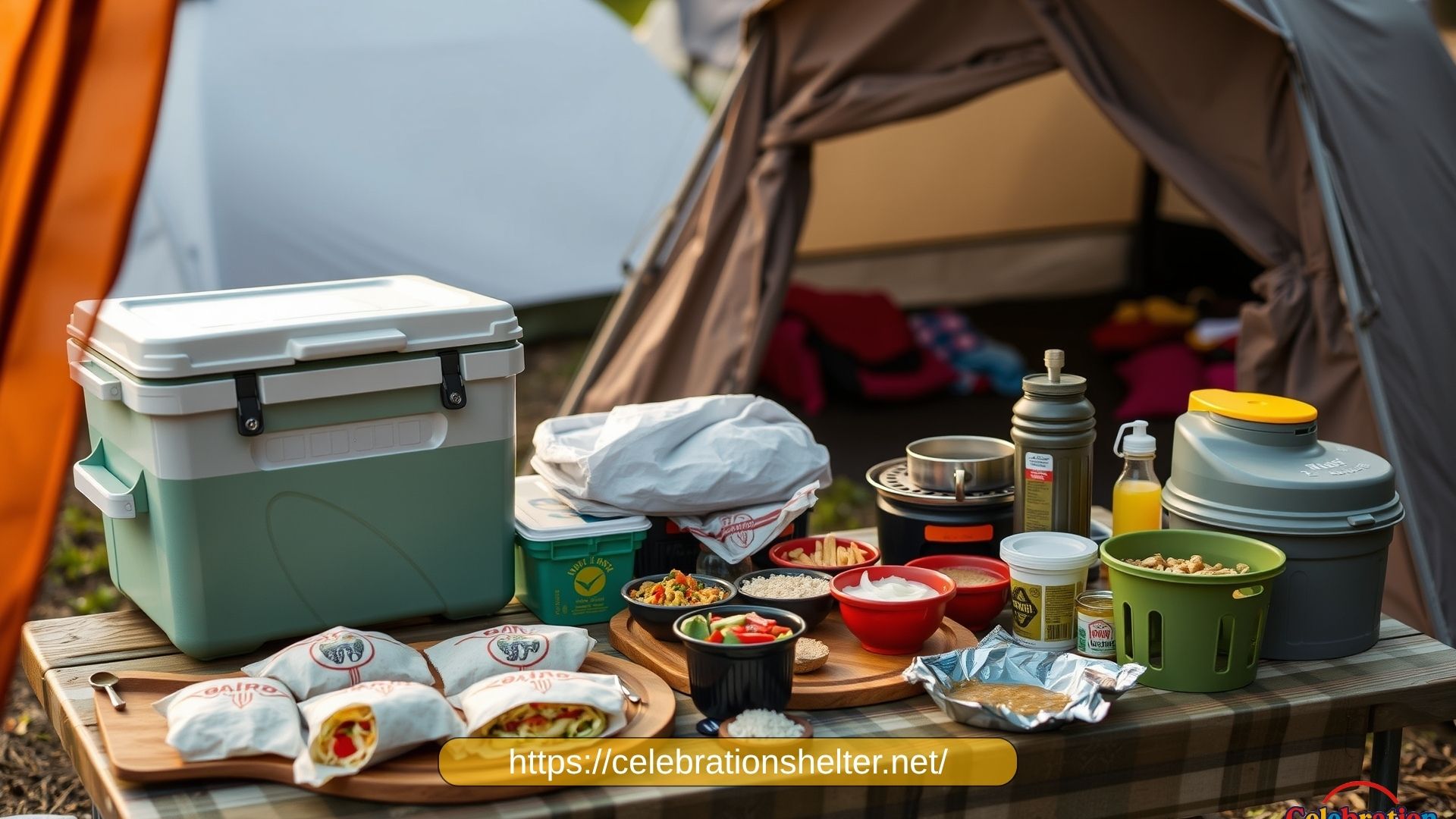
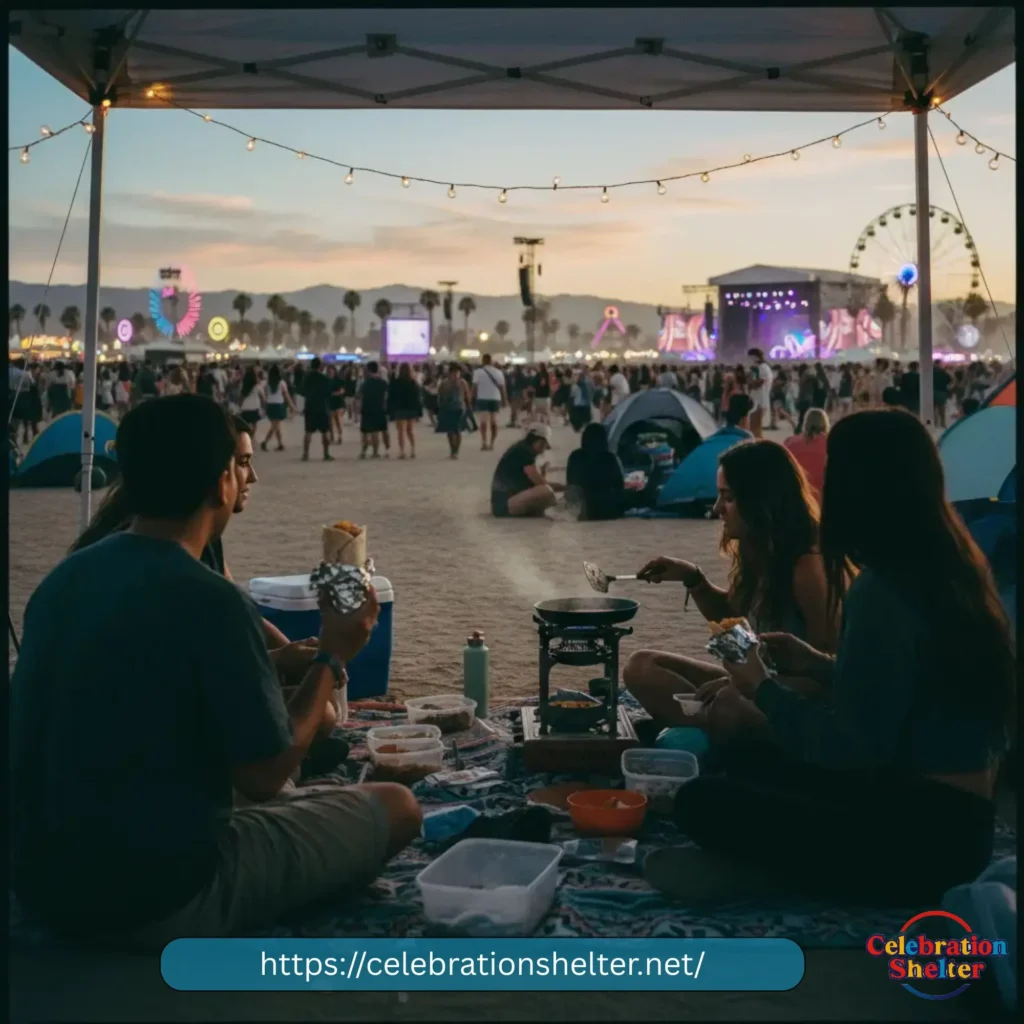
If you’re preparing hot meals, a portable two-burner propane stove lets you cook pasta, rice, or simple one-pan dishes. For lighter operations, a compact backpacking stove is more than enough to boil water rapidly. Pair your cooking unit with a small folding utility table for utensils and condiments to keep your kitchen footprint clean and organized.
Keep Food Fresh
Use a high-quality cooler to store perishable food assets safely. Solid block ice or frozen water bottles last significantly longer than loose ice cubes. Many seasoned 2027 campers bring two separate coolers—one dedicated exclusively to frequent drink retrievals and one kept sealed for primary food preservation.
2027 Festival Camping Food Ideas
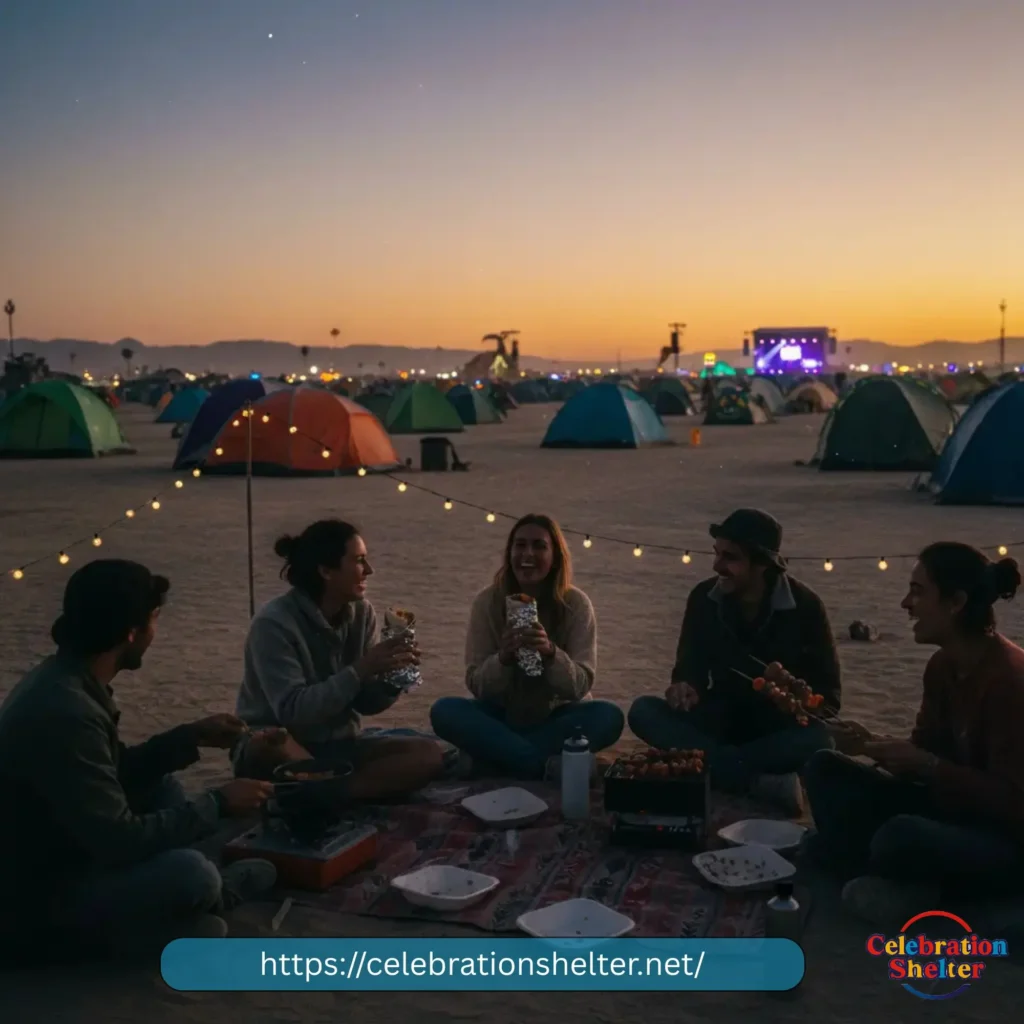
High-energy, shelf-stable snacks are your best friend during long sets. Pack plenty of granola bars, trail mix, beef jerky, and fresh fruit to grab quickly between performances. If tracking teams plan to highlight specialized style guidelines for changing climates, check the music festival outfit guide index to balance lightweight summer layers with proper pocket storage for snacks.
Physical Comfort & Electronics Preservation
Maintain a rigid fluid replacement protocol by carrying an empty reusable water bottle or hydration pack to clear security checkpoints, utilizing free public refilling loops inside the park continuously. Your mobile device functions as your main map, camera, and safety tracker, meaning a dead battery is completely unacceptable. Pack high-capacity portable power banks and external solar chargers to preserve device connectivity all weekend.
Integrating high-performance production layouts keeps your physical base camp perfectly synchronized with global music festival event infrastructure protocols. If out-of-town groups locate lodging properties outside the central campsite field, check property safety parameters before sharing an Airbnb node among active staff. If your chosen campground topography borders regional rivers, coastal bays, or high-humidity channels, evaluate your parameters using the water music festival log to mitigate heavy fluid saturation hazards safely. Planners configure technical parameters at the start, using the correct event creation timeline options to secure all necessary municipal vehicle camping decals smoothly.
Final Thoughts
Operating a successful festival campsite requires balancing data-driven resource budgeting, high-efficiency food storage, and disciplined hydration tracking. Following this systematic development process guarantees that your temporary base camp remains safe, organized, and fully comfortable across all seasons.