Best Camping Spots in the USA: 12 Parks Worth Booking
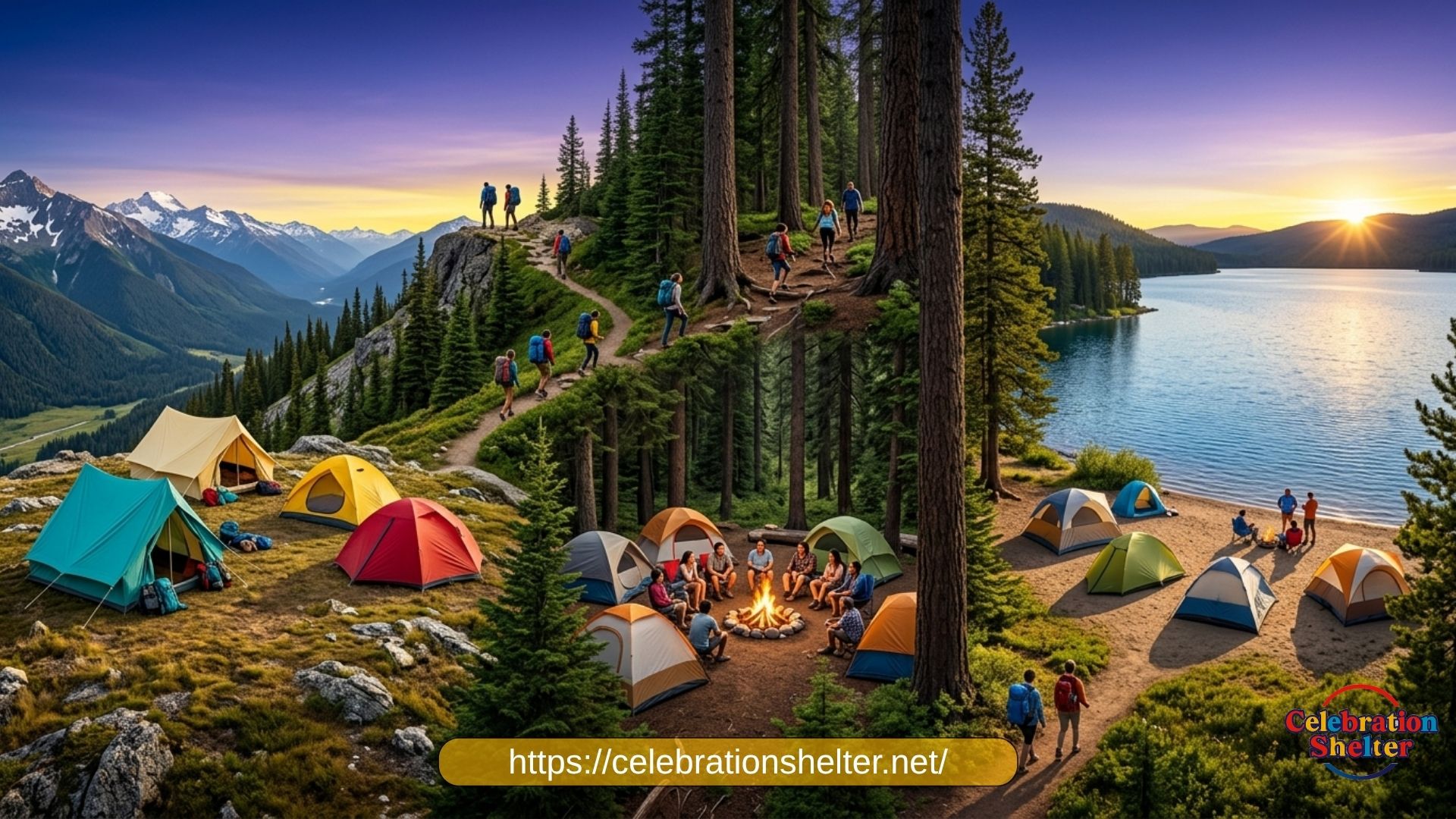
The United States has more legal places to pitch a tent than almost anywhere on earth — 63 national parks, 154 national forests, 245 million acres of Bureau of Land Management land, and thousands of state park campgrounds on top of that. The hard part is not finding a campsite. It is knowing which one is worth the six-month booking scramble, what it costs, and when to show up.
This guide covers the best camping spots in the USA by region, with realistic nightly fees, the specific campgrounds worth booking inside each park, the best season to go, and how the reservation system actually works. If you camp at music festivals and want to try the backcountry version, the last sections bridge the two.
Best Camping Spots in the USA at a Glance
| Destination | State | Typical fee / night | Best season | Book through |
|---|---|---|---|---|
| Yosemite National Park | California | $18–$36 | May–September | Recreation.gov |
| Glacier National Park | Montana | $10–$23 | July–September | Recreation.gov |
| Acadia National Park | Maine | $22–$60 | June–October | Recreation.gov |
| Zion National Park | Utah | $20–$30 | March–May, Sept–Nov | Recreation.gov |
| Great Smoky Mountains | Tennessee / N. Carolina | $17–$30 | April–June, October | Recreation.gov |
| Yellowstone National Park | Wyoming / Montana / Idaho | $20–$35 | June–September | Recreation.gov + park concessioner |
| Grand Teton National Park | Wyoming | $25–$40 | June–September | Recreation.gov |
| Olympic National Park | Washington | $20–$30 | July–September | Recreation.gov |
| Joshua Tree National Park | California | $15–$25 | October–April | Recreation.gov |
| Shenandoah National Park | Virginia | $15–$30 | May–October | Recreation.gov |
| Redwood National & State Parks | California | $35 or less | May–September | ReserveCalifornia |
| White Mountain National Forest | New Hampshire | Free–$25 | June–October | Recreation.gov / first-come |
Who Manages Campgrounds in the USA (And Why It Changes Your Booking)
Before you pick a spot, it helps to know which agency owns the land. The manager decides the price, the booking platform, and how far ahead you have to plan.
- National Park Service (NPS) — the headline destinations. Highest demand, strictest reservation windows, fees usually $15–$40 a night. Book on Recreation.gov.
- US Forest Service (USFS) — 154 national forests, often bordering the famous parks. Developed campgrounds run roughly $12–$25, and dispersed camping is free with no reservation.
- Bureau of Land Management (BLM) — the cheapest legal camping in the country. Mostly desert and high plains in the West, mostly free, mostly first-come.
- State parks — the underrated middle ground. Showers, flush toilets, and real availability, usually $20–$40, booked through state systems like ReserveAmerica or ReserveCalifornia.
- Private campgrounds — KOA, Hipcamp, and independent RV parks. Most expensive, but they have hookups, Wi-Fi, and sites available when the parks are full.
A practical rule: if a national park campground is sold out, look one hour outside the boundary at a national forest or state park. You will usually find a site the same week, for less money.
How to Book a Campsite in the USA
Most federal campsites open for reservation six months before the arrival date, and popular sites at places like Yosemite and Glacier are gone within minutes. A few habits make the difference between getting a site and refreshing an empty map:
- Create the account first. Set up your Recreation.gov login and saved payment method days before, not on release morning.
- Know the release time. Sites usually drop at 10:00 a.m. ET / 7:00 a.m. PT, but not every campground follows that — check the Seasons and Fees tab for the exact time.
- Use one browser window. Multiple tabs compete with each other and slow the checkout down.
- You have 15 minutes. Once a site is in your cart it is held for 15 minutes, then released. Have your dates and vehicle details ready.
- Avoid Friday and Saturday arrivals. A Sunday-to-Thursday trip is dramatically easier to book and quieter once you get there.
- Set cancellation alerts. A large share of summer sites are cancelled within two weeks of the date. Alert tools catch those before anyone else sees them.
Some destinations — including parts of Yosemite and several permit-only backcountry zones — run a lottery instead of first-come reservations. Those close months ahead, so check the park’s official National Park Service page as soon as you pick your dates.
The 12 Best Camping Spots Across the USA
1. Yosemite National Park, California
Yosemite Valley is the most photographed granite in the world, and camping inside it means waking up under El Capitan instead of driving two hours to see it. Upper Pines is the only valley campground open year-round; North Pines and Lower Pines sit right on the Merced River. For cooler nights and thinner crowds, Tuolumne Meadows at 8,600 feet is the better call.
- Fees: roughly $18–$36 per night
- Best season: May to September; waterfalls peak in late May and June
- Booking: valley sites release on a rolling window and sell out in under 10 minutes — set an alarm
- Don’t miss: sunrise at Tunnel View, the Mist Trail to Vernal Fall
2. Glacier National Park, Montana
Thirteen campgrounds, more than 1,000 sites, and 700 miles of trail through alpine meadows and turquoise lakes. Many Glacier is the most scenic and the hardest to get; Apgar is the largest and easiest for first-timers; Two Medicine is the quiet one. Going-to-the-Sun Road usually does not fully open until late June or early July, which compresses the whole season.
- Fees: roughly $10–$23 per night
- Best season: July to mid-September
- Booking: vehicle reservations for some corridors are separate from your campsite — check both
- Don’t miss: Highline Trail, Grinnell Glacier, Lake McDonald’s coloured stones
3. Acadia National Park, Maine
The best coastal camping on the East Coast. Acadia’s campgrounds — Blackwoods, Seawall, Schoodic Woods, and Duck Harbor — are all on or near the water, tucked into spruce forest a short ride from the Atlantic. Cadillac Mountain is the first place in the US to see sunrise for much of the year, and the vehicle reservation for that summit road is a separate booking.
- Fees: roughly $22–$60 per night depending on campground and site type
- Best season: June to October; early October delivers the foliage
- Booking: Blackwoods is closest to Bar Harbor and books first
- Don’t miss: the 45 miles of carriage roads, Jordan Pond, Thunder Hole
4. Zion National Park, Utah
Red sandstone canyon walls, the Virgin River running through the middle of camp, and some of the most dramatic day hikes in the country. Watchman Campground takes reservations and sits inside the south entrance; South Campground is seasonal. Summer heat regularly passes 100°F, which is why spring and autumn are the real camping seasons here.
- Fees: roughly $20–$30 per night
- Best season: March to May and September to November
- Booking: Watchman opens six months ahead and fills fast for spring weekends
- Don’t miss: Angels Landing (permit required), The Narrows, Canyon Overlook at sunset
5. Great Smoky Mountains National Park, Tennessee and North Carolina
The most-visited national park in the US, and still one of the most affordable places to camp. Ten developed campgrounds spread across the Appalachians, with Cades Cove as the classic pick for wildlife, Elkmont for river access and the synchronous firefly display in late spring, and Smokemont for the quieter North Carolina side. No park entrance fee, though a parking tag is required.
- Fees: roughly $17–$30 per night
- Best season: April to June and all of October
- Booking: the firefly event runs on a lottery — enter months ahead
- Don’t miss: Clingmans Dome, Cades Cove Loop at dawn, Laurel Falls

6. Yellowstone National Park, Wyoming, Montana and Idaho
The world’s first national park is also one of the largest camping operations in the country, with twelve campgrounds spread across 2.2 million acres of geysers, canyons and bison range. Madison is central and good for a first visit; Slough Creek is the quiet, rustic favourite for wildlife watchers in the Lamar Valley; Bridge Bay puts you on Yellowstone Lake.
- Fees: roughly $20–$35 per night; some campgrounds are run by the park concessioner rather than Recreation.gov
- Best season: June to September; most roads close to cars from early November
- Booking: check which system your chosen campground uses — they are not all in one place
- Don’t miss: Grand Prismatic Spring from the overlook, Lamar Valley at dawn, Artist Point
7. Grand Teton National Park, Wyoming
Ten miles south of Yellowstone, with a mountain range that rises straight out of the valley floor with no foothills in the way. Jenny Lake is tent-only, walk-in and the best-located campground in the park. Gros Ventre is the biggest and most likely to have space. Pairing Grand Teton with Yellowstone in one trip is the single best value road trip in American camping.
- Fees: roughly $25–$40 per night
- Best season: June to September
- Booking: Jenny Lake is small and releases early — treat it like a concert on-sale
- Don’t miss: Schwabacher Landing at sunrise, Cascade Canyon, Mormon Row barns
8. Olympic National Park, Washington
Three completely different ecosystems inside one park boundary: temperate rainforest, glaciated peaks, and 70 miles of wild Pacific coastline. Kalaloch is right above the beach, Hoh sits in the rainforest, and Sol Duc gives you hot springs and old-growth forest. Pack for rain even in August — the Hoh Rain Forest gets over 140 inches a year.
- Fees: roughly $20–$30 per night
- Best season: July to September for the driest weather
- Booking: several campgrounds hold first-come sites — arrive before noon midweek
- Don’t miss: Hall of Mosses, Rialto Beach tide pools, Hurricane Ridge
9. Joshua Tree National Park, California
The best cold-weather camping in the country and, thanks to genuinely dark skies, some of the best stargazing. Jumbo Rocks puts your tent between house-sized boulders; Hidden Valley is the climbers’ campground; Indian Cove sits in its own rock-walled basin. Almost no campground here has running water, so haul in everything you need.
- Fees: roughly $15–$25 per night
- Best season: October to April — summer daytime highs are dangerous
- Booking: weekends between October and May book out months ahead
- Don’t miss: Cholla Cactus Garden at golden hour, Keys View, the Milky Way after moonset
10. Shenandoah National Park, Virginia
Skyline Drive runs 105 miles along the Blue Ridge, and four campgrounds sit along it. Big Meadows is the most central and busiest; Loft Mountain is the largest and sits on a ridge with views off both sides; Mathews Arm is the quietest. Within a two-hour drive of Washington DC, it is the most accessible great camping in the eastern United States.
- Fees: roughly $15–$30 per night
- Best season: May to October; mid-October foliage is the peak
- Booking: October weekends are the hardest bookings of the year here
- Don’t miss: Old Rag Mountain (day-use ticket required), Dark Hollow Falls, Hawksbill Summit
11. Redwood National and State Parks, California
Nearly half the world’s remaining old-growth coastal redwoods stand here, and four developed campgrounds let you sleep among them. Jedediah Smith and Elk Prairie are the classics — campsites tucked directly under 300-foot trees, with Roosevelt elk grazing the meadows at dusk. Because it is jointly managed by the National Park Service and California State Parks, campsites are booked through the state system, not Recreation.gov.
- Fees: generally $35 or less per night
- Best season: May to September, though fog is part of the experience year-round
- Booking: use ReserveCalifornia rather than the federal system
- Don’t miss: Tall Trees Grove (permit), Fern Canyon, Gold Bluffs Beach
12. White Mountain National Forest, New Hampshire
Proof that the best camping spots in the USA are not all national parks. The White Mountains hold dozens of developed Forest Service campgrounds plus legal free dispersed camping across huge sections of the forest. Fees top out around $25, availability is far better than in the parks, and the autumn foliage in late September and early October is the best in the country.
- Fees: free for dispersed sites, up to about $25 for developed campgrounds
- Best season: June to October
- Booking: many sites are first-come, first-served — a genuine last-minute option
- Don’t miss: Franconia Notch, Mount Washington, the Kancamagus Highway in October
Free and Dispersed Camping: The Cheapest Way to Camp in America
Dispersed camping means pitching outside a developed campground on public land — no fee, no reservation, no facilities. It is legal across most Bureau of Land Management and US Forest Service land, and it is how experienced campers travel the West for weeks at a time on almost nothing.
- Stay limits are usually 14 days in one spot before you must move on
- Camp on existing bare ground and use existing fire rings — never create new ones
- Park at least 200 feet from any water source
- Check current fire restrictions before you even pack a stove; bans are common from June onward
- Carry your own water, and pack out everything including waste
Reliable free areas sit just outside several of the parks above — dispersed sites near Moab for Utah trips, the Shoshone National Forest east of Yellowstone, and the Coconino National Forest near Sedona are all well-established options.
Festival Camping vs. Wilderness Camping: What Actually Transfers
If your camping experience so far is a tent in a field at a three-day festival, you already have more of the skill set than you think. The overlap is real — and so are the differences.
- Transfers directly: pitching fast in bad light, sleeping through noise, rationing water, keeping a bag organised. Everything in our camping festival checklist works in a national park too.
- Changes completely: there is no water truck, no medical tent, and no phone signal. Wilderness camping is self-supported, and a food resupply may be an hour’s drive away.
- Gets easier: designated campgrounds have flat pads, fire rings, and bathrooms — luxuries compared to a muddy general admission field.
- Gets harder: wildlife, altitude, and weather. A bear box is not optional, and mountain temperatures can drop 30°F after sunset.
Campers who love the social side of a festival weekend usually enjoy the hybrid option: multi-day events with on-site camping, like Electric Forest in Rothbury, sit exactly between the two worlds. We break down why in camping at music festivals, and if the outdoors is new territory entirely, start with how to become outdoorsy in 8 easy steps.

What to Pack for a US Camping Trip
Gear lists get long fast. These are the items people most often wish they had brought:
- Shelter and sleep: three-season tent, sleeping bag rated 10–15°F colder than the forecast, and an insulated sleeping pad — the pad matters more than the bag
- Water: a minimum of one gallon per person per day, plus a filter or purification tablets for backcountry sources
- Food storage: a hard-sided cooler and, in bear country, the campground’s bear box or an approved canister
- Light: a headlamp and spare batteries — camp chores after dark are miserable with a phone torch
- Layers: merino or synthetic base layers, a fleece, and a rain shell, regardless of the season
- First aid: blister care, antihistamines, and any personal medication in a waterproof pouch
- Navigation: downloaded offline maps and a paper backup, since most parks have no cell coverage
For a packable version you can copy straight into your notes app, see our music festival packing list and 15 lightweight go-bag essentials — both translate well to campground trips.
Camp Responsibly: Leave No Trace and Wildlife Safety
Record visitation has put real pressure on American campgrounds. The seven Leave No Trace principles are the accepted standard, and following them is the difference between a site that stays open and one that gets closed for restoration.
- Camp on durable surfaces — existing pads, rock, gravel or dry grass, never fragile meadow
- Pack out all rubbish, including food scraps and orange peel
- Keep fires inside established rings, keep them small, and drown them until cold
- Store every scented item — food, toothpaste, sunscreen — in a bear box or locked vehicle overnight
- Keep at least 100 yards from bears and wolves, 25 yards from bison, elk and moose
- Carry bear spray in Glacier, Yellowstone and Grand Teton, and know how to use it before you go
Check the official National Park Service alerts page for your destination within 48 hours of leaving — fire closures, road openings and bear activity notices change weekly, and the National Weather Service forecast for a mountain campground rarely matches the one for the nearest town. Our guides to staying safe in crowds and event health cover the human side of the same problem.
Best Time of Year to Camp in the USA
| Season | Where to go | What to expect |
|---|---|---|
| Spring (Mar–May) | Zion, Joshua Tree, Great Smoky Mountains | Desert parks at their best, waterfalls running, low crowds |
| Summer (Jun–Aug) | Glacier, Yellowstone, Olympic, Acadia | Only window for high alpine access; book six months out |
| Autumn (Sep–Nov) | Shenandoah, White Mountains, Zion | Foliage, cool nights, easiest bookings after Labor Day |
| Winter (Dec–Feb) | Joshua Tree, Big Bend, Everglades | Southern desert and subtropical parks; almost no crowds |
The single best value window across the whole country is the two weeks after Labor Day. Summer heat has broken, school holidays are over, most campgrounds are still fully open, and sites that were impossible in July become available the same week.
Frequently Asked Questions
What is the best camping spot in the USA for beginners?
Great Smoky Mountains National Park. Campgrounds are affordable, there is no entrance fee, the terrain is forgiving, towns with supplies sit right outside the boundary, and the elevation is low enough that weather rarely turns dangerous. Shenandoah and Acadia are close seconds.
How much does camping in the USA cost per night?
Dispersed camping on BLM and Forest Service land is free. Developed national forest campgrounds usually run $12–$25, national park campgrounds $15–$40, state parks $20–$40, and private RV parks or KOAs $40–$90 with hookups.
How far in advance should I book a campsite?
Most federal campsites open six months before the arrival date. For Yosemite Valley, Glacier’s Many Glacier, or Grand Teton’s Jenny Lake in peak season, you should be online the moment the window opens. For national forests and shoulder-season trips, two to four weeks is usually enough.
Can I camp in a national park without a reservation?
Sometimes. Several parks — including Olympic and parts of Great Smoky Mountains — keep first-come, first-served loops. Arrive midweek before noon, and always have a national forest or BLM backup within an hour’s drive.
Which US national park has the best camping?
Glacier National Park, on balance. Thirteen campgrounds and over a thousand sites mean genuine choice, fees are among the lowest of the major parks, and the scenery from the campgrounds themselves — not just the trailheads — is hard to match anywhere else in the country.
Do I need a permit to camp in the USA?
Not for developed campgrounds — a reservation is enough. Backcountry and wilderness camping almost always requires a permit, and a few high-demand routes such as Zion’s Angels Landing or Yosemite’s Half Dome run separate lotteries. Check the park’s official page before you finalise dates.
Final Thoughts
The best camping spots in the USA reward planning more than budget. A $20 site under the redwoods booked six months early beats a $90 RV pad reserved in a panic, and the two weeks after Labor Day will get you into places that felt impossible in July. Pick one destination from the table above, set a calendar alert for the day its booking window opens, and build the trip from there.
If your next trip involves live music as well as a tent, our complete music festival guide and the upcoming events calendar will help you line the two up in the same season.