What to Wear to a Festival: The Complete Outfit Guide

Figuring out what to wear to a festival is really two problems at once: you want to look good in photos, and you want to still be standing at 1 a.m. after eight hours on your feet. Most outfits that win the first problem lose the second one. Stiff denim, brand-new boots, a bag that digs into your shoulder, a top that traps heat — these are the things that send people back to the campsite by mid-afternoon.
This guide walks through the full outfit from the skin out: base layers, fabrics, layering for the temperature drop after sunset, footwear, accessories, and outfit ideas for specific festival types — from an EDM weekend to a country fest to a beach show. If you are still deciding which event to attend, our broader music festival guide covers the planning side, and the music festival packing list covers everything that goes in the bag rather than on your body.
Festival Outfit at a Glance
If you only read one section, read this one. A festival outfit that works almost always has these six parts:
- A breathable base — cotton, linen, or a moisture-wicking synthetic that moves air instead of holding sweat.
- Bottoms you can walk ten miles in — no waistband that pinches when you sit on the grass.
- One packable layer — a flannel, zip hoodie, or overshirt for when the sun goes down.
- Broken-in shoes with real socks — the single biggest comfort decision you will make.
- A hat and sunglasses — shade you carry with you.
- A hands-free bag — crossbody or fanny pack, zipped, worn in front in crowds.
Start With the Festival, the Weather, and the Ground
There is no universal festival outfit. What works at a desert festival in April fails at a Midwest fest in October. Before you pick a single garment, answer three questions.
Check the Forecast and the UV Index
Look at the daytime high, the overnight low, and the chance of rain for each day — not just the weekend average. A twenty-degree swing between 3 p.m. and midnight is normal at outdoor events, and it is the main reason people are miserable at night. Also check the EPA UV Index forecast for the venue. An index of 8 or higher means you want covered shoulders, a wide brim, and reapplied sunscreen, no matter how hot it feels.
Know the Terrain: Grass, Dust, Sand, or Mud
Terrain decides your shoes and the color of everything below the knee. Grass fields turn to mud after one storm. Desert grounds like Black Rock City coat everything in fine alkaline dust — our Burning Man festival guide goes deeper on dust-proofing. Beach venues mean sand in every seam, and light, quick-drying fabric beats anything heavy. Some sites also restrict what you can stake or drag across the field, which our notes on festival ground protection explain.
One Day vs. a Camping Weekend
A single-day ticket means one outfit and a light bag. A camping weekend means you are also dressing for a tent at 6 a.m., a shower queue, and no laundry. Camping shifts the whole calculation toward darker colors, faster-drying fabric, and one warm layer you never take out of the pack. The festival camping checklist and camping at music festivals guide cover the rest of that setup.
Building Your Base Festival Outfit
The base layer is whatever sits directly against your skin all day. Get this right and everything else is decoration. Get it wrong and no accessory will save the afternoon.
Tops That Breathe All Day
Loose tank tops, cropped tees, camisoles, and mesh overlays all work because they let air move across your skin. Lightweight cotton and linen are the safe default for dry heat. If you expect humidity or you plan to be in the front of a crowd, a moisture-wicking synthetic or a merino blend will pull sweat away faster than pure cotton, which holds water and starts to chafe once it is soaked. Bodysuits are popular at electronic events because nothing rides up when you dance, but they are slow to deal with in a portable toilet queue — worth knowing before you commit to one for a full day.
Whatever you pick, test it at home first: wear it for two hours and walk around. Seams that feel fine in a fitting room become a problem at hour six.
Getting the Fit Right
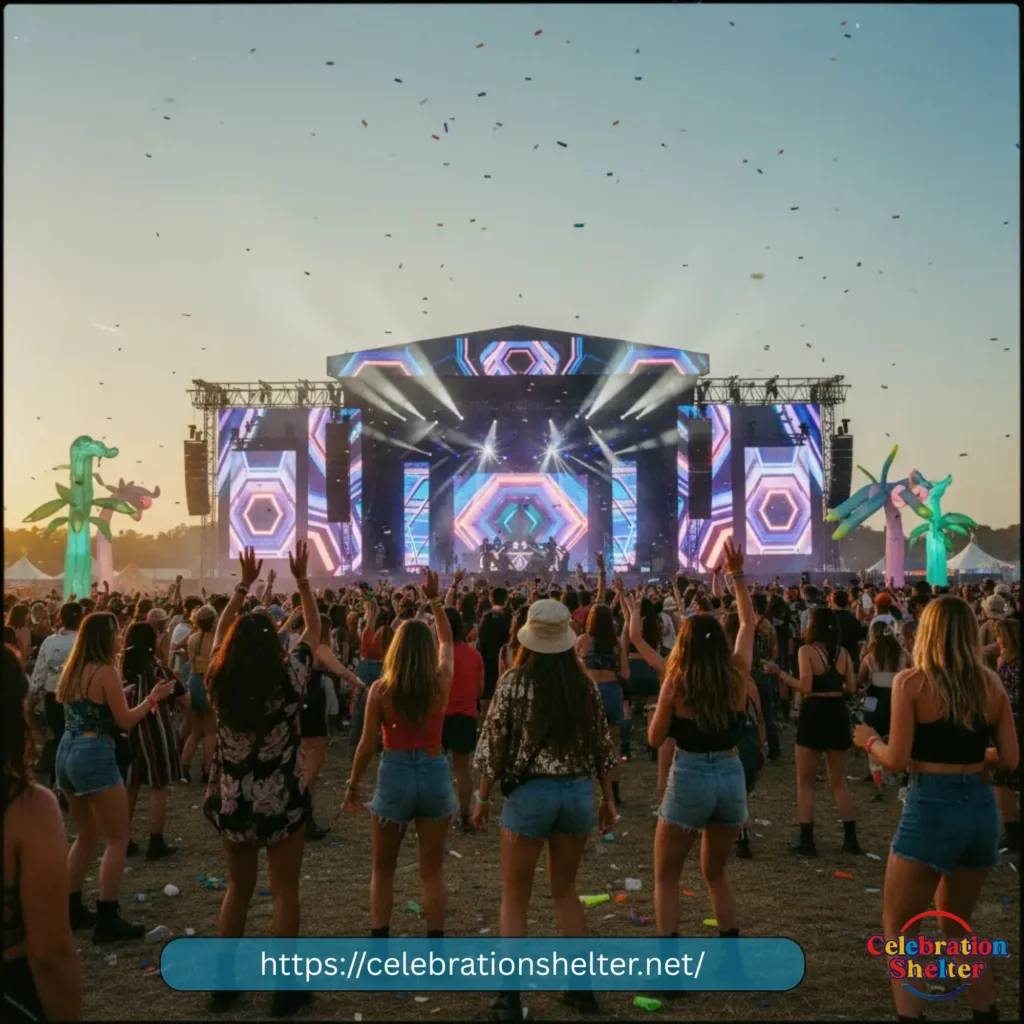
Fit matters more than fabric weight. Anything skin-tight traps heat against you and turns damp fabric into friction. Anything so loose it catches on people or barriers becomes a nuisance in a packed crowd. Aim for a relaxed fit that skims rather than clings, and check three specific points before you leave: the armpits, the waistband, and wherever a bag strap will sit. Those are the three places blisters and rubs actually happen.
Bottoms Built for Walking
You will cover far more ground than you expect — multi-stage festivals routinely put people over ten miles a day. Denim cut-offs, athletic or bike shorts, flowy wide-leg pants, cargo pants with real pockets, and lightweight utility skirts all work. Heavy rigid denim does not; it holds heat and gets brutally cold once it is wet. If you are wearing a skirt or dress, put fitted shorts underneath. They stop thigh chafing and they mean you can sit anywhere without thinking about it.
Prioritise pockets that close. A zip or button pocket for your phone means you are not fishing in your bag every ten minutes.
Choosing Length and Coverage
Shorter cuts feel cooler but leave more skin exposed to sun for eight-plus hours. Longer, loose bottoms in a light fabric are often genuinely cooler than shorts in direct sun, because they shade you while still letting air through. This is the same principle behind desert clothing. A practical compromise: shorter bottoms for the shaded afternoon sets, a light long layer for peak sun and again after dark when insects come out.
Colors That Work in Sun and in Photos
Light colors reflect heat and stay cooler in direct sun, but they show dust, grass, and spilled drinks immediately. Darker colors hide the mess but absorb heat. The usual answer is a light top with mid-tone or darker bottoms. Bright saturated colors and metallics photograph well and, more usefully, make you easier for your group to spot in a crowd of thousands. Avoid pure white below the waist at any camping or field festival — it will not survive day one.
Fabric Guide: What Each Material Actually Does
Most festival outfit advice skips fabric entirely, which is strange, because fabric is what decides whether you are comfortable. Here is the short version.
- Cotton — soft, breathable, cheap. Absorbs sweat and stays wet, so it is best for dry heat and short days.
- Linen — the most breathable natural option, dries fast, wrinkles constantly. Excellent for hot, dry venues.
- Moisture-wicking polyester or nylon — pulls sweat to the surface and dries quickly. Best for humidity, rain, and front-of-crowd dancing.
- Merino wool — regulates temperature in both directions and resists odour over multiple days. The quiet winner for camping weekends.
- Mesh and open knits — maximum airflow and a rave staple, but zero sun protection. Layer over something or accept the sunburn.
- Heavy denim and leather — look great, hold heat, punishing when wet. Fine for cool-weather festivals, a mistake in July.
Layering for the Day-to-Night Temperature Drop
Almost every outdoor festival gets noticeably colder after sunset, and desert and mountain venues can drop twenty to thirty degrees. The people shivering through the headliner are the ones who dressed only for the afternoon. One good layer, tied around your waist or stuffed in a bag, fixes the whole evening.
Light Button-Ups and Overshirts
An open flannel or a lightweight button-up is the most flexible layer you can bring. Open in the afternoon it shades your shoulders and arms; buttoned at night it holds warmth; tied at the waist it disappears. Cotton flannel and chambray both work.
Zip Hoodies for Cooler Nights
A thin zip hoodie beats a pullover for one reason: you can adjust it without taking anything off over your head in a crowd. Pick one with a zipped pocket and a hood you will actually use if it drizzles.
Cardigans, Kimonos and Shackets
Open-front layers — a soft cardigan, a printed kimono, a light shacket — add warmth without heat build-up, and they carry a lot of the visual identity of boho festival style. They pack down small and they read as a deliberate outfit choice rather than an afterthought.
The Rain and Mud Plan
Rain is the scenario most people fail to plan for, and it is the one that ruins a weekend fastest. Umbrellas are banned at most large events because they block sightlines, so your plan has to be worn, not carried. A packable rain shell that folds into its own pocket weighs almost nothing. A cheap poncho works too and takes up less room than a phone.
Once a field turns to mud, closed shoes with grip become non-negotiable and anything long and loose will drag through it. Keep a dry pair of socks sealed in a plastic bag — changing socks mid-day is the single highest-return move in wet weather. More field-tested tricks like this are collected in our festival hacks roundup.
Festival Footwear: What Actually Survives the Weekend
Shoes are where festival outfits are won or lost. Nothing else on this list will affect your day as much. The rule is simple: closed toes, real cushioning, already broken in.
Sneakers for All-Day Comfort
Cushioned running or trainer-style sneakers are the default choice for a reason. They handle distance, they have grip, and they dry reasonably fast. Choose a pair you already own and already trust, and accept that they will come home stained.
Boots for Dust, Mud and Crowds
Ankle boots and combat boots protect your feet from being stepped on, keep dust and mud out, and give you stability on uneven ground. They are the standard at country festivals and at dusty desert events. The trade-off is heat, so look for a lighter sole and avoid anything fully insulated in summer. Our guide to camping boots for festivals compares specific styles in more detail.
Sandals for Beach and Water Festivals
Sandals are only a good idea where the ground is sand or the event involves water — and then only strapped sport sandals, never flip-flops, which offer no protection in a crowd. Look for padded or neoprene-lined straps, because bare straps saw at your skin over long distances. See the beach music festivals guide and our water music festival notes for venue-specific advice.
Socks Are Half the Battle
Cushioned moisture-wicking socks in synthetic or merino wool cut friction dramatically and keep your feet dry, which is what actually prevents blisters. Cotton socks hold sweat and are the most common cause of ruined feet at festivals. Pack one clean pair per day plus a spare.
Break Your Shoes In Before You Go
Brand-new footwear at a festival is the most common and most avoidable mistake there is. Wear any new pair for at least three or four long walks beforehand. If you cannot, bring blister plasters and tape the hot spots preemptively rather than waiting for them to form.
Accessories That Earn Their Place
Accessories at a festival are mostly equipment wearing a costume. Each one below does a job. If an item does not, leave it at home — you will be carrying it for twelve hours. Our companion music festival outfit guide pairs these with full looks.
Hats for Portable Shade
A bucket hat, wide-brim straw hat, or cap is shade you carry with you, and shade is scarce at most festival grounds. Wide brims protect ears, neck, and nose — the three spots people always burn. A chin cord sounds unnecessary until the first gust of wind sends your hat into the crowd.
Sunglasses That Stay Secure
Look for full UV400 protection and a frame that grips. Bring an inexpensive pair you will not mourn, because festival sunglasses get sat on, dropped, and lost. A retainer cord is worth the mild indignity.
Crossbody Bags and Fanny Packs
Hands-free is the only sensible way to carry anything. A crossbody sling or belt bag keeps your phone, ID, and cash on your body and out of reach. Wear it in front in dense crowds. Backpacks are fine for camping days but slow you down in a pit and are easy to open behind you. The music festival bags guide covers sizing and capacity, and the festival go bag essentials list covers what belongs inside.
Bag Materials and Clear-Bag Policies
Check the event website before you buy anything. A growing number of large festivals and stadium venues enforce a clear-bag policy with a maximum size, and a bag that fails the check at the gate means a long walk back to the car. Beyond the rules, prioritise water-resistant material, a zip closure rather than a magnetic flap, and an adjustable strap. Ripstop nylon and coated canvas both handle rain and dust well.
Jewelry, Glitter and Body Art
Keep jewelry light and expendable. Layered chains, stacked bangles, and hoops all photograph beautifully and all snag on straps and hair in a crowd. Leave anything sentimental or valuable at home — festivals are a bad place to notice a lost earring. If you use glitter, choose a biodegradable version; several festivals now restrict plastic microglitter for environmental reasons.
Earplugs Belong in Your Outfit
Sound at a main stage regularly exceeds the level at which prolonged exposure causes permanent damage — the CDC notes that hearing loss from noise is permanent but entirely preventable. High-fidelity musician earplugs lower the volume without muffling the music, and they cost less than a ticket. Our guide to concert hearing protection compares the options.
Festival Outfit Ideas by Festival Type
The single biggest driver of what to wear is the kind of festival you are attending. A rave outfit looks out of place at a bluegrass weekend, and vice versa.
EDM and Rave Festivals
Think bright color, mesh, bodysuits, sports bras, bike shorts, metallics, and reflective or light-up details that read well after dark. Comfort still rules, because these are dance-heavy events — cushioned sneakers over platforms. Kandi bracelets remain part of the culture at events like the Electric Daisy Carnival. Anything that reflects at night doubles as a way for your group to find you.
Boho and Desert Festivals
Flowing maxi dresses, crochet tops, fringe, wide-brim hats, layered necklaces, and earth-tone palettes define the desert festival look. The practical constraint is dust and a sharp night-time temperature drop, so bring a real layer and choose fabrics you can shake clean.
Country and Americana Festivals
Boots, denim shorts or straight-leg jeans, gingham or western shirts, and a straw hat. This is one of the few festival contexts where boots are the comfortable choice rather than the stylish one, because the ground is usually grass or dirt and the days are long.
Rock, Punk and Metal Festivals
Band tees, black denim, cut-off vests, and sturdy boots. Darker palettes hide dirt, and closed shoes are essential if you plan to be anywhere near a pit. Our Warped Tour guide is a useful reference point for the format.
Hip-Hop Festivals
Streetwear leads here: oversized tees, cargos, tracksuits, statement sneakers, and caps. Crowds tend to be dense, so a small zipped crossbody and shoes you do not mind scuffing matter more than usual. See the Rolling Loud guide for the scale involved.
Beach and Water Festivals
Swimwear under a light cover-up, quick-drying shorts, strapped sandals, and a hat. Salt and sand destroy delicate fabric, so keep it simple and washable, and bring one dry layer for the evening breeze.
Fall and Cold-Weather Festivals
Layer properly: a thermal or merino base, a fleece or hoodie, and a wind-resistant outer shell. Add a beanie and gloves, because standing still in a field at night is much colder than the forecast suggests. Harvest and autumn events, covered in our harvest fest tips, run late into cold evenings.
What to Wear to a Festival as a Guy
Men get less festival outfit coverage than they should, and the formula is straightforward. Start with a breathable tee, tank, or short-sleeve camp shirt. Add lightweight cargo shorts, chino shorts, or loose trousers with secure pockets. Finish with cushioned sneakers or ankle boots, a cap or bucket hat, sunglasses, and a sling bag worn across the chest.
The two upgrades that make the most difference: an open short-sleeve overshirt, which adds shade during the day and a layer at night without any bulk, and switching from cotton to a technical tee if you will be dancing. Skip heavy jeans and skip anything you would be annoyed to get dirty.
Multi-Day Packing: How Many Outfits Do You Need?
For a three-day festival, most people over-pack clothing and under-pack socks. A workable formula:
- One outfit per day, plus one spare — four total for a three-day event.
- One clean pair of socks and underwear per day, plus two spares — these are small, and they are what actually make you feel human.
- One warm layer and one rain layer for the whole trip, not one per day.
- Two pairs of shoes — your main pair and a backup in case the first gets soaked. Camp slides for the tent are a luxury worth the space.
- A dry bag or a few sealable plastic bags to separate wet and dirty items from clean ones.
Build outfits around a shared color palette so pieces mix and match; that is how four items turn into six looks. If cost is a constraint, our festival budget tips cover getting a full kit together without buying everything new.
What Not to Wear to a Festival
A short list of the things people regret every single year:
- Brand-new shoes. The number one cause of a ruined day.
- Flip-flops or open-toe sandals in a crowd. Your feet will get stepped on.
- Heels or platforms on grass or dirt. They sink, they twist ankles, and they are miserable by hour three.
- Heavy rigid denim or leather in summer. Hot when dry, worse when wet.
- Anything expensive or sentimental. Jewelry, designer bags, heirlooms — leave them home.
- A single outfit with no layer. You are dressing for two climates, not one.
- Cotton socks. Cheap to fix, painful to ignore.
- Costumes that block other people. Oversized wings, tall headpieces, and full-face masks are restricted at many events.
Comfort, Sun and Safety
Your outfit is also your protective equipment. These three habits matter as much as anything you wear.
Sun Protection
Eight to twelve hours of direct exposure is a serious dose. The CDC recommends combining shade, protective clothing, a wide-brim hat, UV-blocking sunglasses and broad-spectrum sunscreen rather than relying on any one of them. Tightly woven or UPF-rated fabric blocks more UV than a thin white tee, which lets a surprising amount through. Reapply sunscreen roughly every two hours and immediately after swimming or heavy sweating — set a phone alarm, because nobody remembers on their own.
Staying Cool During Peak Heat
Loose, light-colored, breathable clothing helps your body shed heat; tight dark synthetics work against it. Pair the right outfit with the basics the National Weather Service recommends for heat safety: drink water steadily rather than in bursts, take breaks in shade during the hottest hours, and treat dizziness or stopping sweating as a signal to get out of the sun immediately. A damp bandana or cooling towel at the neck makes a genuine difference. Our festival energy tips and festival safety tips go further on pacing a long day.
Keeping Your Things Secure
Zipped pockets and a front-worn crossbody defeat most opportunistic theft. Carry only what you need: phone, ID, a card, a little cash, and your ticket. Many events are now cashless, which reduces what you need on you — see our notes on cashless music festivals. Take a photo of your ID and your ticket as a backup.
Festival Outfit FAQs
What should I wear to my first music festival?
Keep it simple: a breathable top, comfortable shorts or loose pants, broken-in sneakers with cushioned socks, a hat, sunglasses, and a light layer for the evening. Add a small zipped crossbody bag. Save the ambitious outfit for your second festival, once you know how the day actually feels.
What shoes are best for a festival?
Broken-in cushioned sneakers for most events, ankle or combat boots for dusty, muddy, or country festivals, and strapped sport sandals only for beach and water events. Avoid heels, platforms, and flip-flops entirely.
How do I dress for a festival in very hot weather?
Choose loose, light-colored, breathable fabric — linen, cotton, or moisture-wicking synthetics. Cover your shoulders and neck with light fabric rather than leaving skin bare, wear a wide-brim hat, and carry a damp bandana. Loose long sleeves in a light fabric are often cooler in direct sun than a tank top.
How many outfits do I need for a three-day festival?
Four outfits — one per day plus a spare — built around a shared color palette so pieces mix. Pack five pairs of socks and underwear, one warm layer, and one rain layer for the whole weekend.
Can I wear a dress to a festival?
Yes, and a flowing midi or maxi dress is one of the coolest options in hot weather. Wear fitted shorts underneath to prevent chafing and let you sit anywhere, and keep the hem clear of the ground if the field is muddy.
What bag is allowed at most festivals?
Many large events enforce a clear-bag policy with a size limit, so check the specific festival website before buying. Where regular bags are allowed, a small water-resistant crossbody or belt bag with a zip closure is the practical choice.
What should I wear to a festival at night?
The same base outfit plus the layer you carried all day. A flannel, zip hoodie, or shacket handles most venues; desert and mountain sites need something warmer. Reflective or light-up details help your group find you in the dark.
Final Thoughts
The best festival outfit is the one you stop thinking about ten minutes after you walk through the gate. Breathable fabric, bottoms you can walk in, shoes that are already broken in, one layer for the temperature drop, and a bag that stays on your body — get those five right and everything else is styling. Match the palette and silhouette to the type of festival, check the forecast and the terrain, and pack for the version of the day where it rains.
Ready to plan the rest of the trip? Browse the festival planning guide, work through the music festival checklist, and see what is coming up on our events calendar. Tag us on Instagram when you land on a look you love.