Music Festival Camping Setup: Smart Tips for a Comfortable Weekend
The journey to an open-air music festival can be just as exciting as the event itself. Before you even set up your living compound, planning how you’ll get to the site coordinates makes everything significantly easier. If you’re flying to a destination event, book your flights early and compare car rental prices ahead of time using digital trackers to secure a stable route. For those driving personal vehicles, check your route in advance and isolate gas stations or grocery stops along the way.
Arrive as early as the opening schedule allows. This gives you more time to pick a prime campsite location, unload your heavy gear at a relaxed pace, and avoid the massive gate lines that build later in the day. Keep your entry tickets, parking passes, and legal credentials held inside a small folder or waterproof pouch so they don’t get lost in the shuffle. A smooth start sets a great tone for the entire weekend.
Bags, Organization, and Spatial Efficiency
Once you clear vehicle inspection, keeping your personal belongings in order saves hours of time and stress. A high-capacity duffel bag or sturdy, weather-resistant backpack works infinitely better than a rolling suitcase on rugged, uneven agricultural camping grounds. To make your mornings seamless, pack individual daily clothing setups inside labeled zip bags. Isolating one complete outfit per bag ensures you don’t have to dig through messy piles when you’re physically exhausted after a midnight set.
A form-fitting hydration backpack is an absolute necessity on the fields. Look for a model featuring a two-liter fluid reservoir and a secure mouthpiece cover. Campsites and festival grounds can get hit by intense dust plumes, and a covered nozzle keeps your drinking line clean. Use hanging mesh organizers or small utility pouches to store your sunblock, tech chargers, pocket snacks, and small tools in plain sight. If you are flying light, utilizing vacuum-sealed bags shrinks bulky items like heavy hoodies and sleeping blankets down cleanly while keeping them dry.
Camping Gear Architecture: Shelter & Sleep
Canopy, Shade, and Perimeter Setup
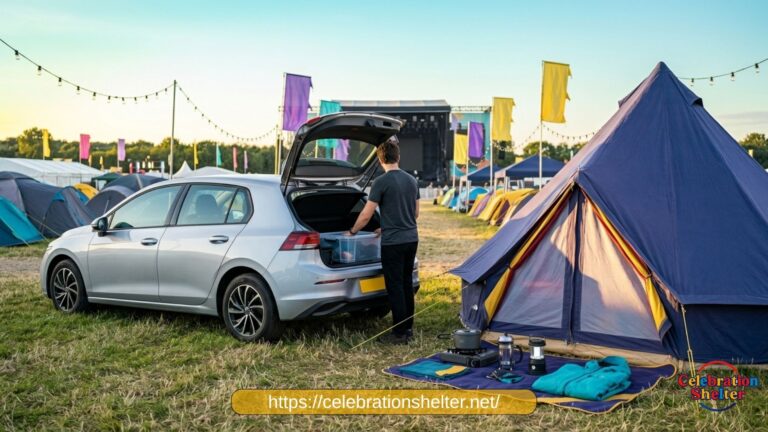
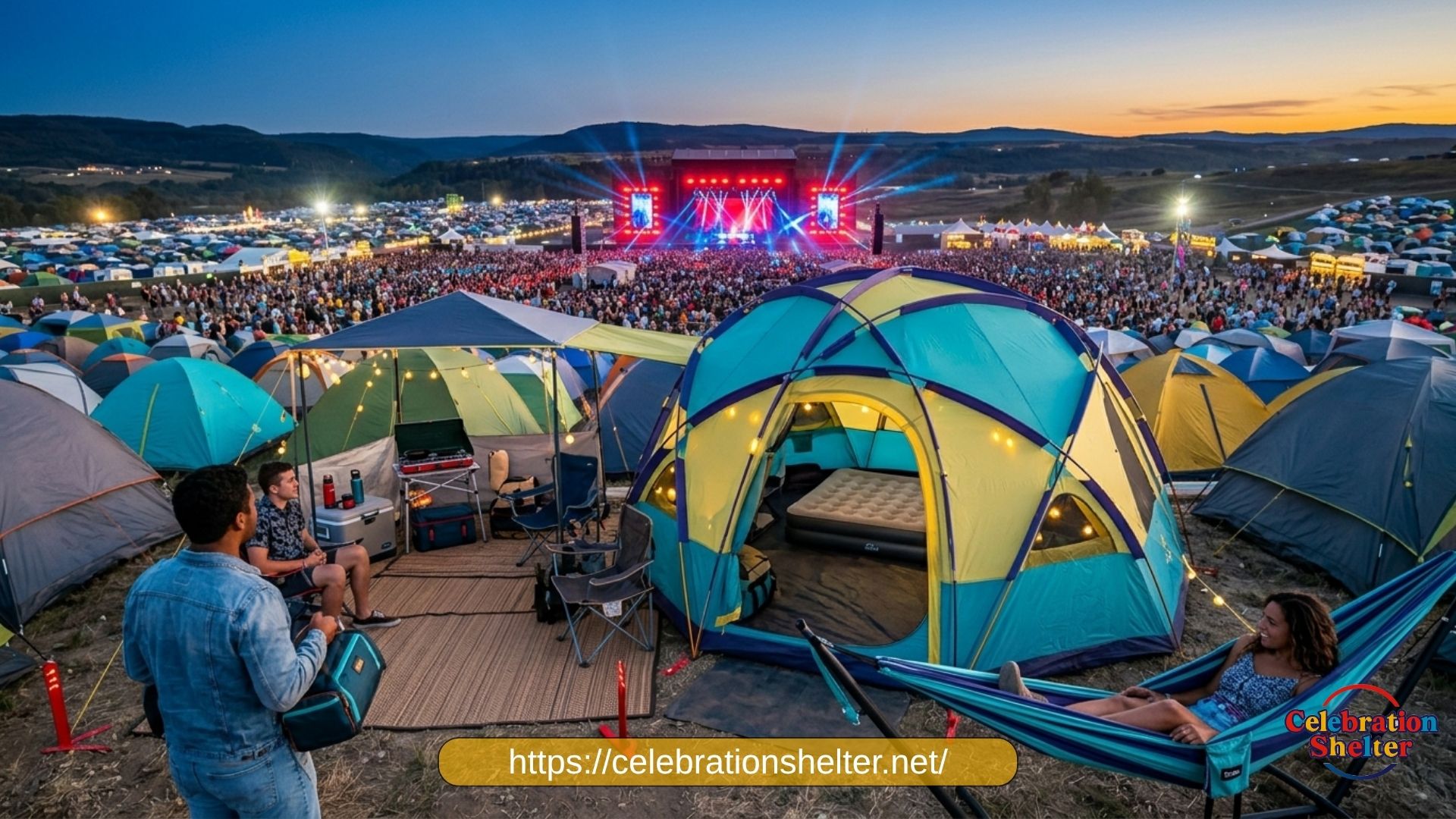
Shade is absolute gold at multi-day festivals. Invest in a 10×10 straight-leg pop-up canopy instead of the slant-leg variety, as the straight-leg design provides maximum square-footage to shield your tent from solar heat. Ditch the flimsy metal pins that come inside the factory box; deploy heavy-duty steel stakes and high-tensile ropes instead. High wind gusts are incredibly common across open valley grids, and you must prevent your canopy structure from turning airborne. Hang tapestries, sheets, or privacy screens around your canopy borders, anchoring them firmly with heavy binder clips so you can move them as the solar angle shifts.
Tent and Sleeping Systems
Select an outdoor tent that privileges rapid assembly. Instant pop-up frames save immense energy, especially if you must anchor your camp after dark. Always choose a tent rated slightly larger than the actual headcount using it; a four-person tent accommodates two adults and their gear comfortably. Secure your tent footprint with durable stakes driven completely flush into the topsoil. For your sleeping framework, utilizing raised air mattresses or thick, high-density foam sleeping pads insulates your body safely from the cold ground. Pair your pad with a warm sleeping bag and an ergonomic travel pillow to ensure deep muscle recovery.
Base Camp Utilities
Pack durable folding quad chairs for group relaxation and sharing communal camp meals. A lightweight aluminum folding table is incredibly useful for morning food prep, organizing electronics, and campsite card games. Bringing a reliable, low-profile portable camp stove makes hot breakfasts and late-night meals possible without leaving your footprint. Deploy thick, heavy-duty contractor trash bags immediately upon arrival; keeping a perfectly clean site layout blocks bugs and pests while accelerating your packing process on the final day.
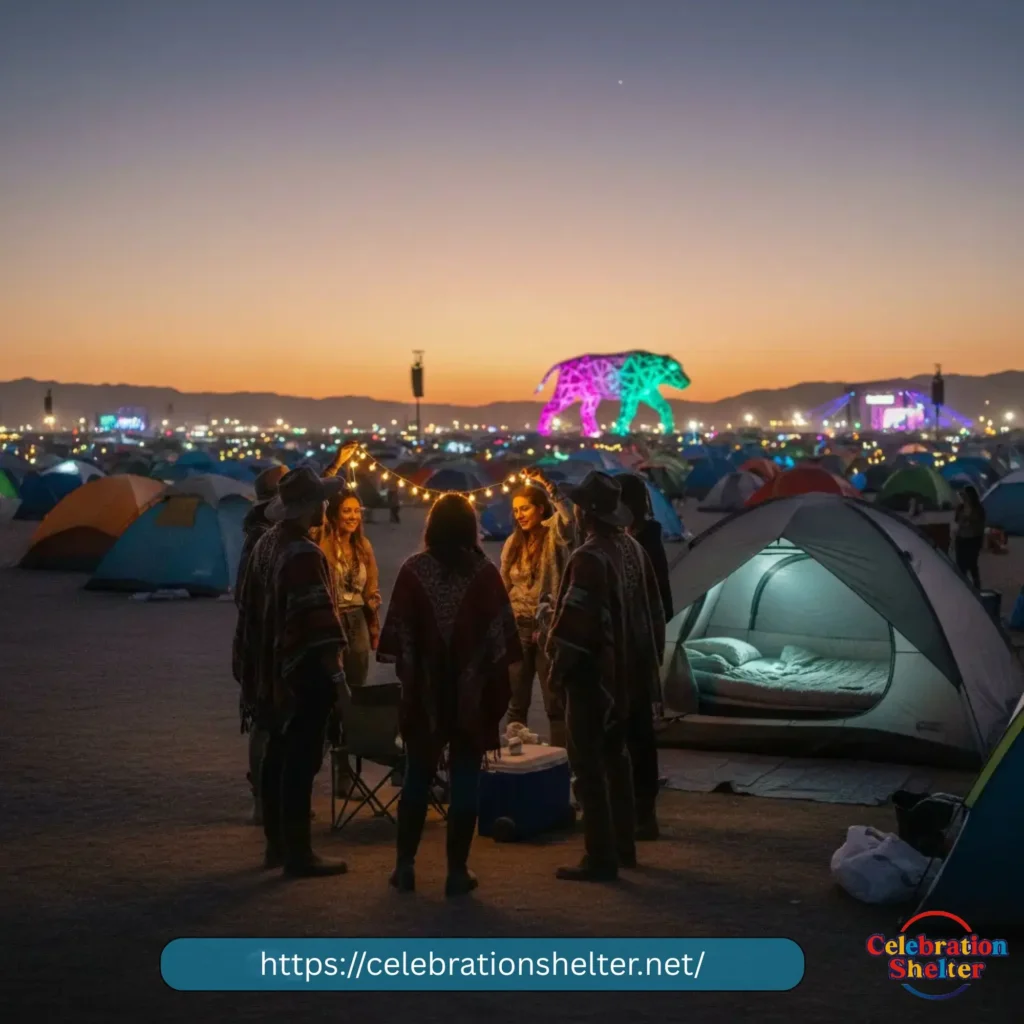
Fun Assets to Elevate Your Campground Chill Zone
Living inside a campground metropolis isn’t merely about basic survival; it is about building an authentic home base between sets. Deploying inflatable wind sofas or blow-up loungers provides an exceptionally comfortable, lightweight spot to sink into during hot afternoons. Laying down weather-resistant outdoor rugs or woven plastic mats in front of your tent doors blocks loose dirt from entering your sleeping space while making your area feel deeply welcoming to neighbors.
If you want to discover why living directly inside the campground grid elevates your entire journey, check out our comprehensive analysis on why camping at music festivals makes the experience better to build instant connections. Add battery-powered LED string lights or solar-charged lanterns to your canopy poles. These personal touches create a beautiful nighttime atmosphere and make it effortless to locate your camp coordinates when returning from the main stage fields after midnight.
Vital Health, Hydration, and Core Protection
Your physical health and internal hydration should always remain your highest operational priorities. Pack high-velocity electrolyte powder packets to mix directly into your water flasks, replacing the vital minerals lost through continuous dancing. Keep a clean, lightweight cloth bandana or face covering on hand to shield your lungs when high pedestrian traffic stirs up dust trails. Carry a small first-aid utility case containing vitamins, pain relievers, and allergy medications to manage physical fatigue quickly.
Never underestimate the power of deep, restorative sleep. Packing high-fidelity earplugs and a light-blocking sleep mask ensures you can rest comfortably even while late-night campground parties continue nearby. For a master list of essential items to pack for a stress-free weekend, check out our music festival packing list to verify your resources.
Campsite Toiletries & Personal Grooming
While public festival restrooms and portable units are notoriously unglamorous, building a compact, dedicated bathroom kit makes the experience entirely bearable. Keep a small roll of toilet paper, travel hand sanitizer, heavy-duty baby wipes, and disinfecting surface wipes held together inside a small daypack for rapid trips to the stalls.
Pack your daily grooming layout—including broad-spectrum sunscreen, deodorant, toothbrush, toothpaste, and refreshing face wipes—inside clear organizers. Dry shampoo and hair ties are invaluable assets to maintain cleanliness with minimal fluid utility. If you love applying cosmetic body glitter or vibrant festival makeup, use simple Vaseline or skin-safe balms to secure biodegradable glitter flakes cleanly, and bring a small, freestanding mirror so you can style your look hands-free.
Performance Apparel and Technical Footwear
Your wardrobe choices directly impact your physical stamina. Open-field events experience dramatic thermal swings; hot, sun-drenched afternoons can instantly plummet into cold nights. Pack multi-tier clothing layers, including warm thermal pajamas, heavy fleece hoodies, and extra socks. Always pack far more socks and underwear than your baseline itinerary demands—sweat, mud, and blowing dust will force you to change pairs quickly.
Supportive, broken-in footwear is completely non-negotiable. Seasoned veterans continuously rotate between rugged boots, running sneakers, and secure sport sandals depending on the changing state of the terrain. Having reliable backups prevents painful friction blisters from locking you down. To ensure your wardrobe balances style with comfort, consult our ultimate music festival outfit guide for expert style tips.
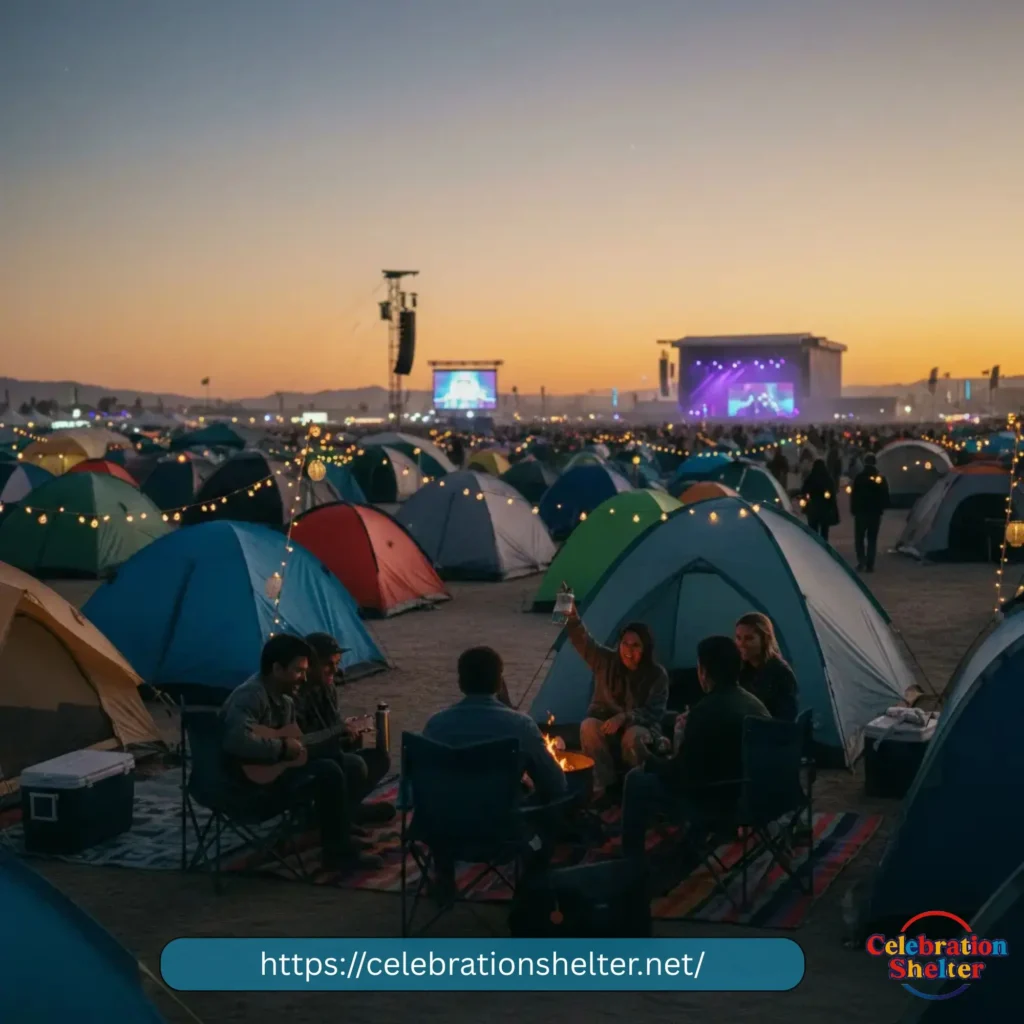
Technical Electronics Infrastructure
Your smartphone serves as your primary camera, site map, and emergency lifeline, demanding disciplined power management. Carry at least two high-capacity, verified portable power banks capable of delivering multiple full device charges. Small solar chargers frequently underperform under active festival timelines, so rely on plug-in backup units. Bring multiple heavy-duty charging cables in case a cord breaks or gets lost in the grass.
High-efficiency LED headlamps or rechargeable flashlights are exceptionally vital, keeping your hands free and your paths safe during late-night campground walks. If you want to document your favorite musical showcases or crowd moments in high definition, consider using a compact action camera; these devices handle heavy dust, vibration, and sudden rain drops far better than vulnerable smartphones.
Campsite Food, Drinks, and Cooler Management
Maintaining peak physical energy requires continuous calorie management. Stock your camp boxes with shelf-stable snacks like high-protein bars, raw nuts, chips, and trail mixes. Pre-made sandwiches, wraps, and cold pizza slices wrapped tightly in foil are excellent low-prep go-to meals. For refreshing, hydrating options, bring durable fruits like whole watermelons, oranges, and grapes that handle heat waves gracefully.
THE THREE-TIER COOLER SETUP
1. SOLID BASE: Frozen solid water jugs line the bottom floor
2. MID-LAYER: Pre-cooked meals sealed in watertight bags
3. TOP HARVEST: Fresh fruits, canned drinks, and loose ice
Freeze multiple water bottles solid before departing your home coordinates; they function as clean ice packs inside your cooler before thawing into ice-cold drinking water. Bring large reusable water jugs to supply your camp kitchen cleanly while minimizing plastic waste. While venue alcohol codes vary by brand, most authorize canned beverages like seltzers or beer within campground borders, provided you strictly leave all glass containers at home. To plan a delicious, low-prep menu for the entire trip, review our comprehensive festival food packing guide for smart recipes.
Technical Infrastructure & Cross-Platform Integration
Ensuring proper technical coordination keeps your campsite setup completely aligned with standard live event operations. If you are structuring an independent journey to an unfamiliar destination gathering entirely on your own, reference our best solo music festival guide to master field networking and integrate with incoming travel cohorts effortlessly. If your event site plan involves navigating muddy terrain or variable topsoil, protect your camp access lanes by checking out our directory of the best camping boots for festivals to navigate the grounds safely.
To see what hazardous or bulky materials you must strictly leave at home to clear gate checkpoints smoothly, check our master guide on music festival what not to bring to strip out restricted items. If you are currently building a complete master checklist for your base camp vehicle before launching your tour, optimize your gear layout using our comprehensive camping festival checklist to keep your inventory secure and fully compliant. Planners establish technical travel milestones early, using the correct event creation timeline options to secure all entry passes cleanly.
Final Thoughts
A highly successful music festival camping setup requires balancing robust physical comfort, structural safety, and communal fun. By investing in a straight-leg canopy, anchoring a spacious pop-up tent, maintaining continuous fluid replacement protocols, and organizing your gear assets inside labeled zip bags, you comfortably eliminate logistical friction. Turn your site into an optimized sanctuary where your crew can recharge safely, connect deeply, and keep the good vibes rolling all weekend.